Teenage Wasteland (dir. Amanda McBaine and Jesse Moss)
In 1986, Whitney Houston sang that, “I believe the children are our future,” on her hit single, "The Greatest Love of All". “Treat them well and let them lead the way.” Depending on your feelings about the youth of the day, such a line could be read as anything from a hopeful promise to a terrifying threat. Every generation thinks they were better than the ones that came after it, despite plenty of evidence to suggest that they’re all just as bad as each other. It may be 40 years later, but many of the same people are still hanging around, so it's probably no surprise that for of her intentions, Whitney got that one wrong.
I am also 40 years old now and in my day job I was recently able to develop and lead a project to produce high school educational content. Built around the curriculum, this work embeds the sector within which I work into classrooms by informing students about the many different ways it works including bringing staff to them to educate them on everything we do that might get ignored by guidance councilors and unaware parents. It was an immensely rewarding thing to work on, not least of which because I thought it important to ensure we produced work that treated teenage students as smart young people and not the dumb sacks of rocks that much of society wants us to believe they are. Technology and the changes it has wrought has obviously led to many differences from my time at school, some for the better and some for the worse. And while I do not personally have children of my own—and thank heavens for that—I do think that we shouldn’t just inherently assume they aren’t capable of thought and logic and understanding of potentially complex ideas. We're doomed if we don't and treating them that way does nobody any favours.
Filmmakers Amanda McBaine and Jesse Moss like to make movies with the same hypothesis. The results, as we saw in Boys State, were not always great, but some of them were. Just like every generation, really. Whatever one thought of what occurred in that film's scenario (1000+ teenage boys converging to build a fictional "democracy"; I have not seen the follow-up, Girls State), it's nonetheless insightful to glean what a generation thinks of themselves and where they see themselves in the world of today and, therefore naturally, the future as well. Kids by their nature don’t really look backwards all that much. Older generations may like to think that we did because we had reruns on television and were forced to read more books because we didn’t have the internet like we all do today. Looking back on our childhoods with nostalgia-tinted glasses over adult eyes will always highlight the immense privilege many of us had to grow up when and how we did. The kids of today will do the same in 20, 30 years even if we can't see what they will be nostalgic for. Many of us got to wherever we are now as adults because something somewhere piqued our interest. How easy it would have been to just not be remotely curious about the world were it not for those grownups who did treat us like intelligent beings, whether that be parents, teachers, or anybody else from our childhood universes. And therefore, how, ahem, cringe it is when adults look down on kids and teenagers as just vapid, lazy creatures with no thoughts and capabilities. They are capable of so much if we give them the chance.
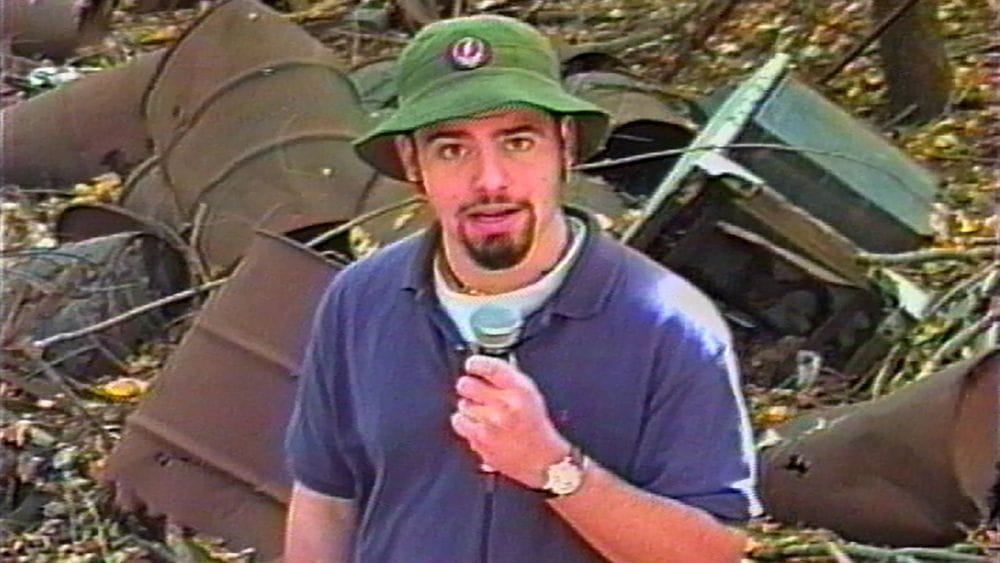
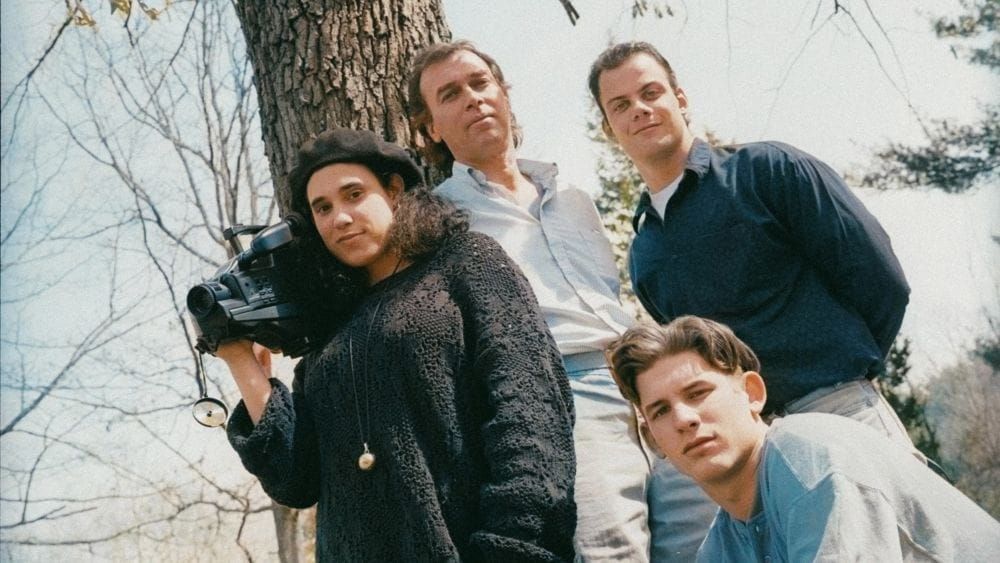
All of which is to get at why I enjoyed McBaine and Moss' Teenage Wasteland so much. This is a film about what can happen when society and adults empower younger people and don’t just assume the worst from them. The kids may be all right if you let them be! In Orange County of upstate New York, a collective of Middletown High School students in 1991 took up an “Electronic English” class (closely aligned to what was called Media Studies in my high school days) and eventually latched on to a particular cause: documenting a potential toxic waste news story that local news and law enforcement have conveniently ignored. Using school-owned cameras and editing suite equipment, they eventually become the news themselves as more local state and mainstream media find the human interest story in these kids even more so than they ever did about the actual issue at hand that they are reporting on.
The students with their teacher-mentors film bubbling sewerage in landfill and discoloured sludge leaking into people’s properties, plus testimonials that recall GasLand and those from Flint, Michigan decades later of foul-smelling, toxic running water. Eventually, they begin interviewing important players in the town, they attend and film town meetings where angry parents speak of babies born with deformities. Unregulated landfill, groundwater contamination, local corruption and even the mafia make for a compelling story. Some think of them as just meddling kids or naïve tree-hugging environmentalists to which, clearly, not much has changed. But through much of their footage, we do see many others take these teens and their mission very seriously. They even gain the trust of a whistleblower and as kids move on to college, new students to the class pick up the camera and the reporting notepad to help document what is really quite a shocking and tragic case of environmental vandalism.
The story is such a strong one that even some of my quibbles with the direction of McBaine and Moss didn’t both me too much. I don’t think the use of recreations work, however modest they may be. And I don’t think I’ll ever understand why documentary filmmakers don’t just use 16:9 aspect ratio for talking head interviews, instead chopping off subjects’ heads with black bars (on a standard television) and causing a persistent jarring visual experience cutting back and forth to 4:3 archival footage. But, hey, that’s me being a pedant. Some fun needle drops by the likes of Veruca Salt and Guided by Voices lend the soundtrack a dose of ‘90s sheen, while the footage taken by these students is genuinely captivating as a glimpse into a burgeoning movement. One wonders where so many of these people sit on such environmental issues now where even things like solar energy have become politicised to the point of absurdity.
The finished product of their hard word was a journalistic documentary titled Garbage, Gangsters, and Greed. Even if they look at it now and see all of its obviously dated teenage glory (particularly as two of them have gone one to have careers behind the camera in Hollywood), I would watch it if it were available! If you have, like me, watched plenty of documentaries about contemporary environmental disasters and the damaging lapses in care and justice that allow them to continue, then Teenage Wasteland should be of interest. I have quoted Whitney Houston already, but like The Who sang in "Baba O'Riley", the song that perhaps lent this documentary its title, they don't need to fight to prove they're right. These kids that many would have dismissed (just as they would today) put a glaring spotlight on a terrible real story because they were told they could by people who knew youth didn't exclude them from having values and something to say. They were right and this documentary is an entertaining ode to that spirit that I have faith will be carried by enough young people as we veer perilously further to an irreversibly toxic future.
If you would like to support documentary and non-fiction film criticism, please consider donating by clicking the above link. Any help allows me to continue to do this, supports independent writing that is free of Artificial Intelligence, and is done purely for the love of it.