Melbourne International Film Festival: Holofiction (dir. Michal Kosakowski)
I once read that Michael Haneke made The White Ribbon (Das weiße band) in black and white because that is how contemporary eyes have always viewed that period of time. Whether through photography, the silent cinema of its age or even the black and white of ink on paper, the 1910s are in their way etched in history through monochrome. I always thought that was such a fascinating way to come at such an artistic decision for a film that tells of a generation who, within just two short decades, would themselves be the ones going to battle like their fathers had, but in an age of advanced warfare and technology and more unimaginable cruelty.
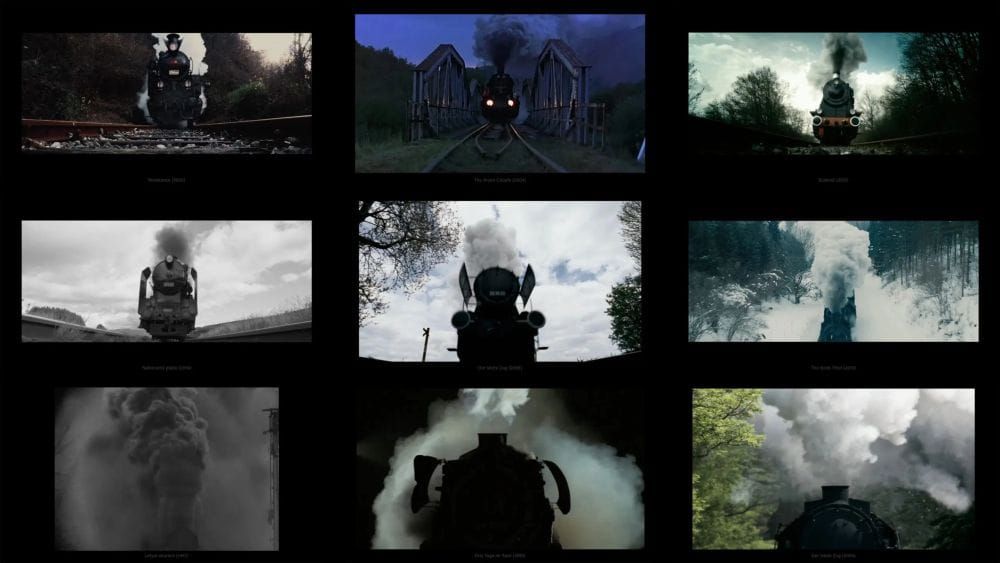
Michal Kosakowski’s feature-length video essay Holofiction draws on films about that later war, World War II, and tasks the viewer with asking similar questions of why and how they were made. In colour as often as black and white, it confronts us with the choices being made by filmmakers across 80+ years of the cinematic artform being used to tell stories of the Holocaust, the most filmed-about event in human history. Is there a reason why so many movies have used and re-used the same visual motifs? The shot of the trains barrelling towards the camera, speakers and shower heads at concentration camps, a mother’s hand outstretched as families are separated by armed guards and wired gates, abandoned shoes and suitcases in the mud. Does this dilute the films when seen one right after the other, or does it actually create something of a unique language all its own that can continue to hold dramatic weight so many years later?
I don’t necessarily think that Kosakowski has answers. I suspect the impetus of the Polish-German director to make this film comes from his eye for catching all of these recurring images and his skill in assembling them. Which is perfectly valid, but this film— devoid of talking heads and narration, corralled from a vast collection of primarily American, British, Polish. Czech, German and Soviet films and television—feels like it ought to have more to say given this is a 100-minute feature and not a compilation uploaded to YouTube. Oftentimes cutting between a dozen films in a matter of seconds, Kosakowski does manage to find rhythms and parallels in films as diametrically opposed as Steven Spielberg’s Schindler’s List or Tim Blake Nelson’s The Grey Zone and late-era nazisploitation titles like Timo Vuorensola’s (AACTA Award-winning!) Iron Sky. He also quite clearly has a particularly interest in the actors, sometimes quite incessantly and in a manner that can be distracting; Willem Dafoe, Ralph Fiennes, Donald Sutherland, Ben Kingsley and others who have played both persecuted and the persecutor. Is he trying to say something here? Again: perhaps. Perhaps not.
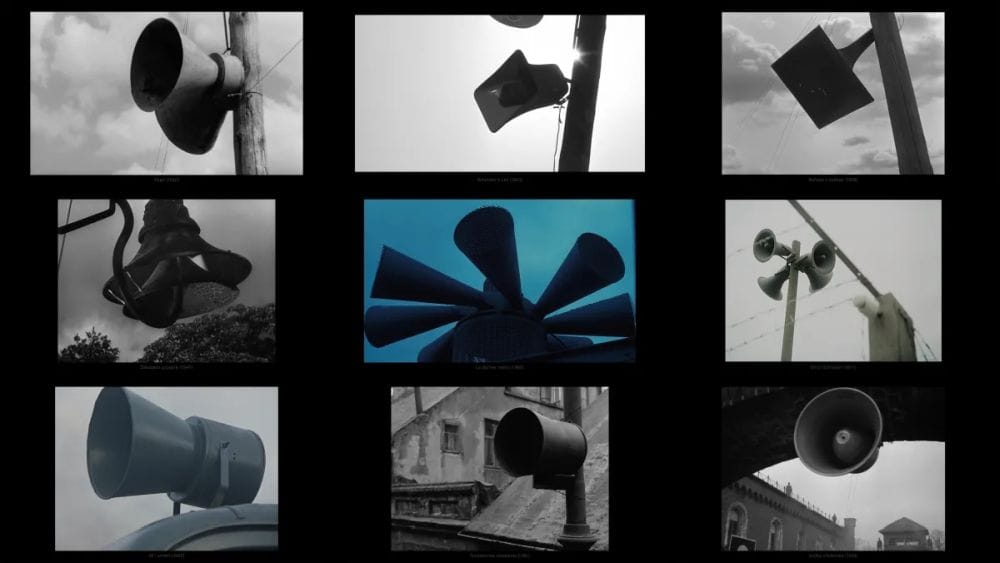
The sheer mass of titles clipped for use—sometimes in the quality of literal bootleg VHS like with Jerry Lewis’ The Day the Clown Cried and some of the older European television movies—sometimes does makes it hard to latch onto ideas beyond the visual. What does placing such disparate titles like Life is Beautiful (La vita è bella) and The Zone of Interest or even an episode of The Twilight Zone alongside one another really allow us to glean about the Holocaust, or more importantly the industry’s consistent interest in it? Other than many of them repeat and recycle similar images and visual concepts. The film opens with a quote about how, “our visual imagination, our collective iconography of the Holocaust is shaped almost entirely by fictional presentations”, which is a great abstract for a work such as Holofiction to begin with, but I’m not sure it really goes beyond that deeply enough to really satisfy as more beyond what it says on the tin. It’s intellectual to a point of not reading the endnotes if you know what I mean. It also leaves documentary and non-fiction out of it entirely, as if Alain Resnais’ Night and Fog (Nuit et Brouillard) or others like it hadn’t inspired many of the aforementioned filmmakers in crafting how to tell such stories. I know it’s called “Holofiction” for a reason, but leaving out such a major part of how audiences have experienced the Holocaust seems like a missed opportunity that Kosakowski’s film perhaps could have really benefitted from.
Holofiction does serve something of a meta place among the long tradition of films about the Holocaust. And in 2026, as another genocidal war rages, Kosakowski’s film is firmly entrenched in the pain, the suffering, the capital-h Holocaust of it all rather than the bloody fighting, guns, tanks and bombs that sometimes have a tendency to take over such stories. Beyond its concept, though, there’s stuff to admire in its production. Notable, composer Paolo Marzocchi provides an industrial, experimental soundscape reminiscent of Paweł Szymański’s work on Maciej J. Drygas’ Trains (Pociągi, my favourite film of last year’s Melbourne International Film Festival) or even, at times, the Oscar-winning sound design of Jonathan Glazer’s The Zone of Interest. Maybe there is a burgeoning comparison point that somebody could make an audio essay about some day.
If you would like to support documentary and non-fiction film criticism, please consider donating by clicking the above link. Any help allows me to continue to do this, supports independent writing that is free of Artificial Intelligence, and is done purely for the love of it.