Ask E. Jean (dir. Ivy Meeropol)
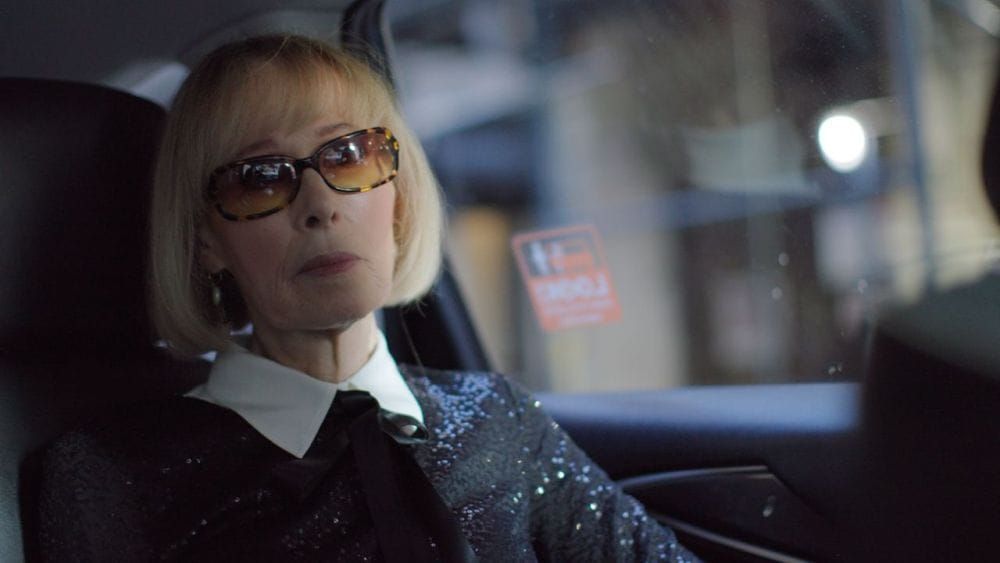
The thing with E. Jean Carroll is that she was plenty worthy of a documentary about her life long before she took Donald Trump to court. Acclaimed journalist; author and editor; successful magazine columnist; Emmy-nominated comedy writer; and cable television host at the height of the 1990s daytime talk show boom. “The female Hunter S. Thompson” as she was known with a singular sense of wit and sense of journalistic adventure. Hell, she was even a national Miss Cheerleader USA title from her time at Indiana University in the ‘60s. An eventful life to be sure and they’ve made movies about people who have done far less.
And then she accused Donald Trump, then President of the United States (for the first time), of rape.
The E. Jean Carroll seen in Ivy Meeropol’s Ask E. Jean (so named after her love and life advice column from Elle that ran 1993 to 2020 as well as the TV series from the mid-‘90s) is quieter than you might think. She lives a modest life at her cottage home (“The Mouse House”) with its colourful furniture, walls of old books and stacks of magazines with a quote by Thackeray painted in fuchsia above her fireplace—“Always Amused, Never Angry”. Her hair is messy, she wears beanies and scarves and what appear to be survivalist overalls. A far cry from the woman who walked into New York courthouses on and off since 2020, her hair remade into a “fuckable” bob, looking and sounding a bit like Diane Keaton (and Marla Maples, apparently!).
Meeropol previously made a documentary about Roy Cohn—2019’s Bully. Coward. Victim. The Story of Roy Cohn—so, I suppose, she has history with the world of Donald Trump and the landscape of Manhattan’s upper class. She smartly weaves both halves of Carroll’s story together, never letting one overshadow the other. Editors Leah Goudsmit and Ferne Pearlstein (each with minimal film experience) do fine work here, championing their subject’s many lives. There’s always a clip from her television show, a media appearance, or a quip from a column or article (like the Fran Liebowitz profile that really put her on the map) to both add texture to Carroll’s life and help illustrate the contemporary news story that brought her back to public attention. It also means that the film does not entirely shy away from acknowledging the unfortunate-in-retrospect public comments and advice that she gave on the subject of sexual assault from her days as a social and political commentator. “Suck it up and get over it”, she says at one point. Showing no real empathy towards Anita Hill and Paula Jones, labelling them “wimps”. More of an exploration of this thorny terrain likely would have made the film even more impressive.
But at a briskly paced 90 minutes, this documentary doesn’t allow the viewer to linger on the seedier, grimier elements of Carroll’s story for too long. Which, yes, may mean it is not as hard-hitting of an exposé as some may hope, but what Ask E. Jean is is an engrossing and surprisingly digestible film despite the subject matter. One that chooses not to let Carroll’s story be reduced to and defined by the sexual assault at Bergdorf Goodman. And that, I think, is to be commended. Even the title, simple and evocative of many things, refuses to tie the need to tell her story to the circumstances of what happened to her in 1996.
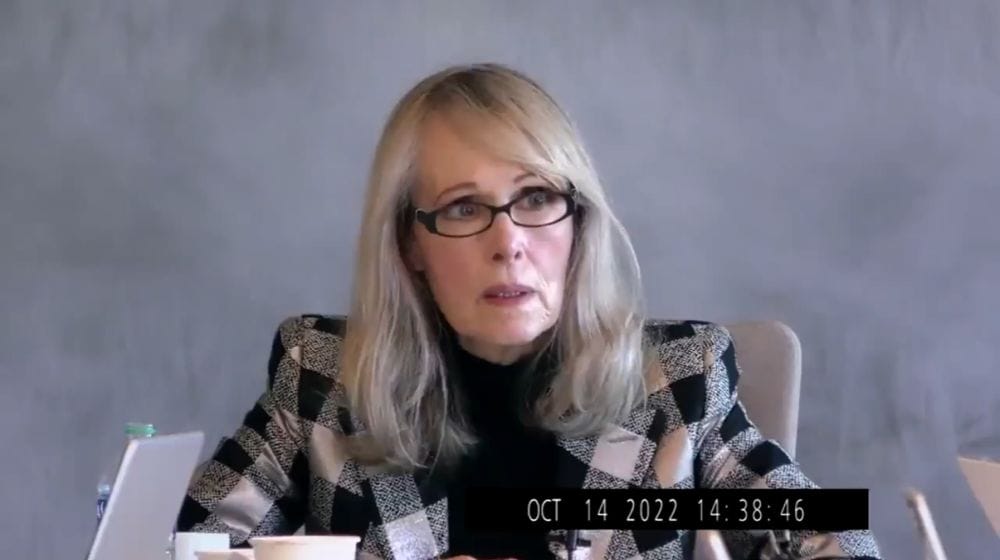
But, of course, the Donald Trump of it all—“a man with a bad combover” as described by her confidant and sit-down interview partner in the doc, Lisa Birnbach—does linger over the film as it will linger of Carroll herself long after the now-82-year-old is gone. “The only woman to beat Trump in court. Twice”, says the promo emails for the film. And quite rightly, too. It’s a remarkable fact and one that the end credits make us aware is still under dispute (although since the release of the film, it appears that Trump has paid the first civil lawsuit of around $5 million). In one of the most telling moments about Trump, Carroll gets in what is perhaps the film’s defining moment outside of Carroll’s depositions shown here on video tape, observing that before, when he didn’t show up in court, it was about rape. Later, when he eventually did appear? It was about money.
As is the want of our culture, the realities of sexual assault will be the first thing said about many people who came forward during the #MeToo movement. Because the violent offences of a man will often be more important than artistic achievements. Ask E. Jean lays the foundation that there's more to her that is worth remembering and celebrating.
If you would like to support documentary and non-fiction film criticism, please consider donating by clicking the above link. Any help allows me to continue to do this, supports independent writing that is free of Artificial Intelligence, and is done purely for the love of it.