American Pachuco: The Legend of Luis Valdez (dir. David Alvarado)
I will be honest and say I was not all that familiar with the Chicano culture at the heart of American Pachuco: The Legend of Luis Valdez. I went into David Alvarado’s biography documentary of the titular Luis Valdez—a man whose political and artistic achievements are synonymous with that culture and the broader Chicano movement of the mid-twentieth century—knowing very little of him and the dense and layered history of the Chicano people (I don’t even know if I am saying that accurately), but it is quite clearly one of emotional, colourful and spirited history that’s worth getting lost in.
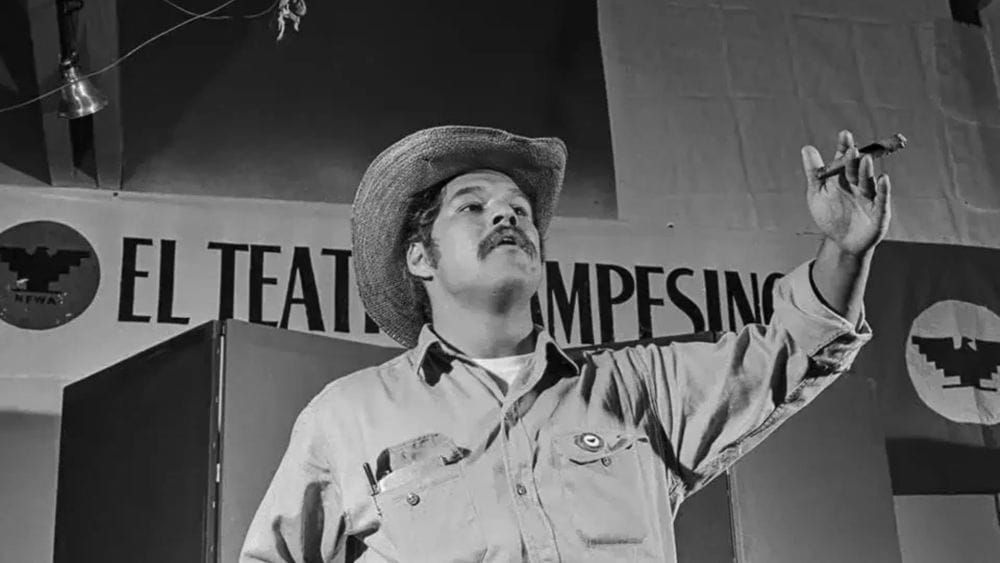
Much like the character portrayed by Edward James Olmos in the theatrical and filmed versions of Zoot Suit (and whose classic character narrates the film), Valdez and his story is a guiding through-line for the viewer in understanding the importance of art and culture to Chicano people and their part of the American story, as well as the richness of what the Chicano identity really meant to people. Luis Valdez himself is maybe a little less interesting of a singular subject as the time period itself and the products he helped bring into the world. I could no doubt watch an entire documentary about the production of his Zoot Suit in Los Angeles and then its largely disappointing stint on Broadway (40-something shows and a lot of dog whistling press). Likewise the industrial union movement of El Teatro Campesino that he helped found, bringing awareness of the experiences of Chicano farmworkers to a larger public through touring theatre and which was where where Valdez sharpened his satirical teeth.
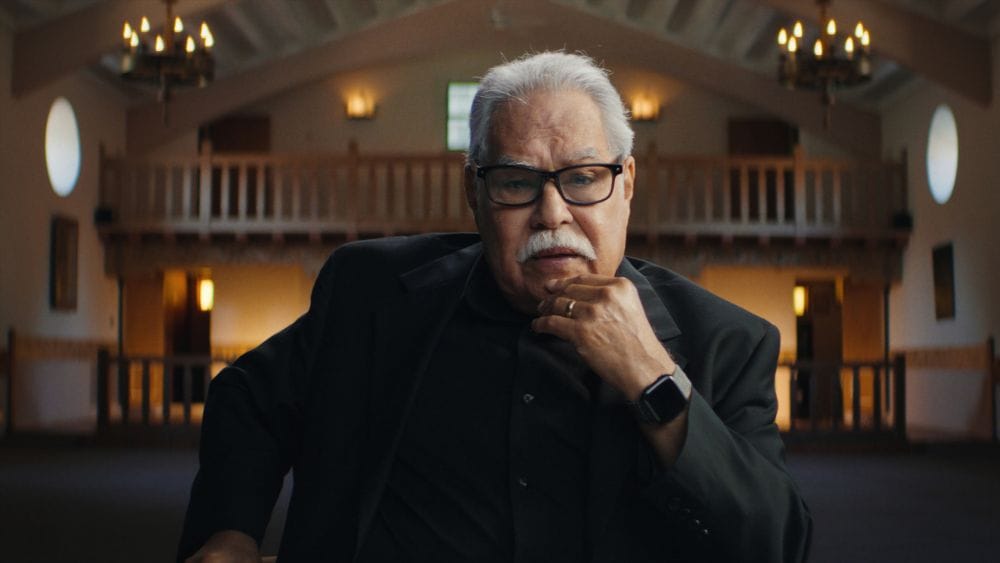
American Pachuco takes its title taken from a rebellious term for Zoot Suiters who rejected assimilation into Anglo-American society. Alvarado chooses to tell Valdez’s story in an unflashy way, leaving the vibrant images of his works to provide most of the cinematic flare alongside the entertaining, animated talking head interviews—Valdez himself, of course, plus many of the creatives who worked with him along the way across film and theatre like Lou Diamond Phillips, Linda Ronstadt, Taylor Hackford and Olmos who gives his stint in the interviewee’s chair a sense of real dramatic flash. Mood lighting and all!
But perhaps sensing that viewers may be less familiar with and therefore less interested in hearing about Valdez’s later career, American Pachuco more or less stops after the successful release of La Bamba into American theatres that also berthed a number one song on the Billboard chart. Valdez is seen receiving a medal from then President Obama for his contributions to progressing the knowledge and understanding of Chicano culture, which seems appropriate, but nothing about The Cisco Kid or how his work in film and television played a part in further opportunities for latin American culture more broadly—like the Pixar animation Coco, in which Valdez had a voice-role—does seem like a missed opportunity. It gives the impression of a rushed ending, which is disappointing considering how nicely Alvarado laid out the earlier parts of his subject’s life for us. And especially considering Valdez’s story is so creatively inspiring.
It’s hard to ignore that American Pachuco is being released in July of 2026, at a time when just the mere mention of anything other than straight, English-speaking and white is viewed through the conservative anti-diversity political lens of the day. Valdez’s films are not especially well known here in Australia and as I said up top, I wasn’t familiar with the intricacies of the Chicano culture within America and Mexico. I appreciated the film for broadening that horizon and doing so with a really lovely collective of people whose passion for art is clear, encouraging and actually quite righteously radical. Whatever those on the ideological right may want us to believe, this is a time for the marginalised to speak up and use art to tell their stories has never been more necessary or accessible. As this documentary shows, Luis Valdez has taken that to heard for much longer than the cultural whims of the day.
If you would like to support documentary and non-fiction film criticism, please consider donating by clicking the above link. Any help allows me to continue to do this, supports independent writing that is free of Artificial Intelligence, and is done purely for the love of it.