Phenomena (dir. Josef Gatti)
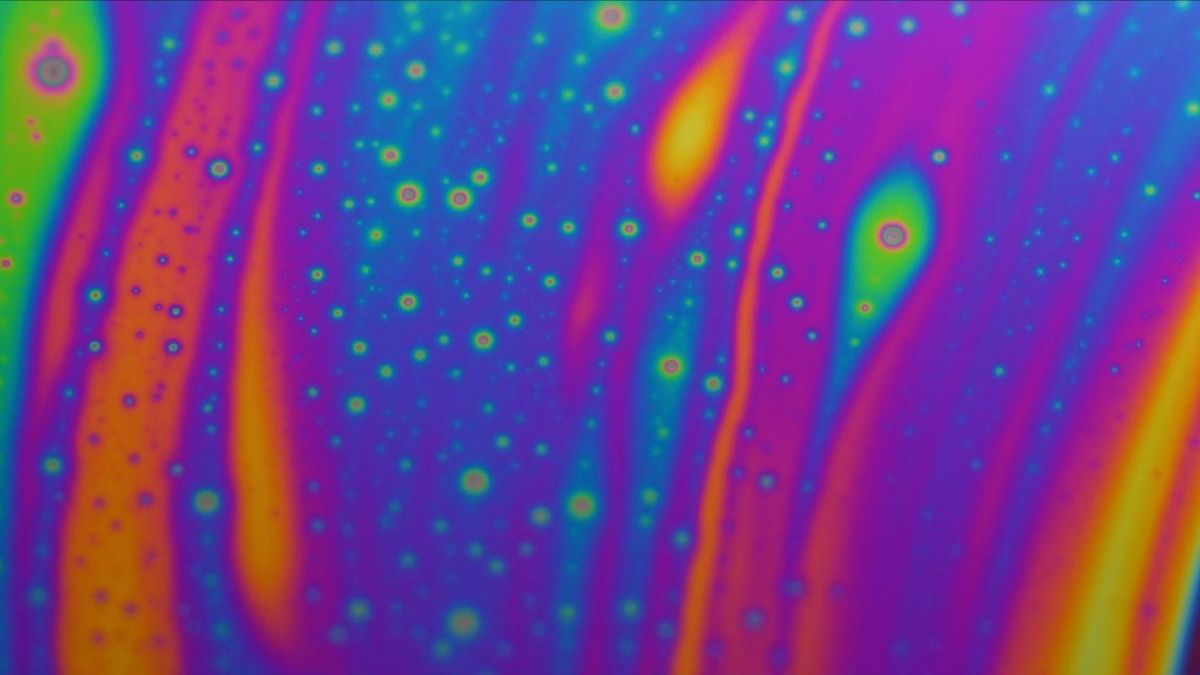
You know what? It’s great that there is a documentary for stoners and acid trippers. Non-fiction for all, I say! Depending on your wavelength, Josef Gatti’s Phenomena could play like going to science class after smoking a joint behind the gymnasium and being mesmerised by the swirling colours or the natural patterns. Albeit with no teacher up front to send you to the principal's office. Or it might just make you wanna transport into another terrain of existence, journeying with the molecules and the atoms to worlds unknown. Maybe you'll just find it kinda neat.
Note: I was neither stoned nor tripping while watching Phenomena. But when the movie is marketed with the line that it is a “psychedelic odyssey”, I think you have to expect it.
Phenomena is Gatti’s first feature film after working as a cinematographer and documentarian primarily in the local music scene as well as museum pieces. Let me just say, I wasn’t surprised in the least to learn any of this—this film feels so Melbourne coded. I’ve been to my share of experimental cinema events, often at festivals or tucked away in backrooms at bars or micro theatres, and if you strip away the parts of this movie that aren’t the dazzling scientific experiments, you have the sort of innovative experimental works of art that are common in that world. In some ways, I think it’s good that Gatti has wrapped his mini feats of what might otherwise be known as avant-garde in a traditional narrative of human curiosity. People who wouldn’t step foot in an experimental shorts package might actually find themselves able to experience their pleasures—and if you're unfamiliar, they are pleasures. I was only able to watch this at home, but I have to imagine it would be even more pleasurable on a bigger screen.
As a work of storytelling, Phenomena is on one hand very modest. It is simply the story of a man (Gatti himself) who sets about, as the press notes add, “documenting the beauties and intricacies of nature in the most unlikely places.” It begins in the back shed with his father, a physics teacher, showing him classroom experiments with bubbles. He later moves on to artists using science in their works, and friends with their own curiosity on the matter between ventures outward into the Australian bush. Underneath that more standard simplicity, on its other hand, is a narrative that—from Gatti’s own mouth—travels through space and time. It has a curious effect that will largely depend on the attitude you bring to the movie in the first place.
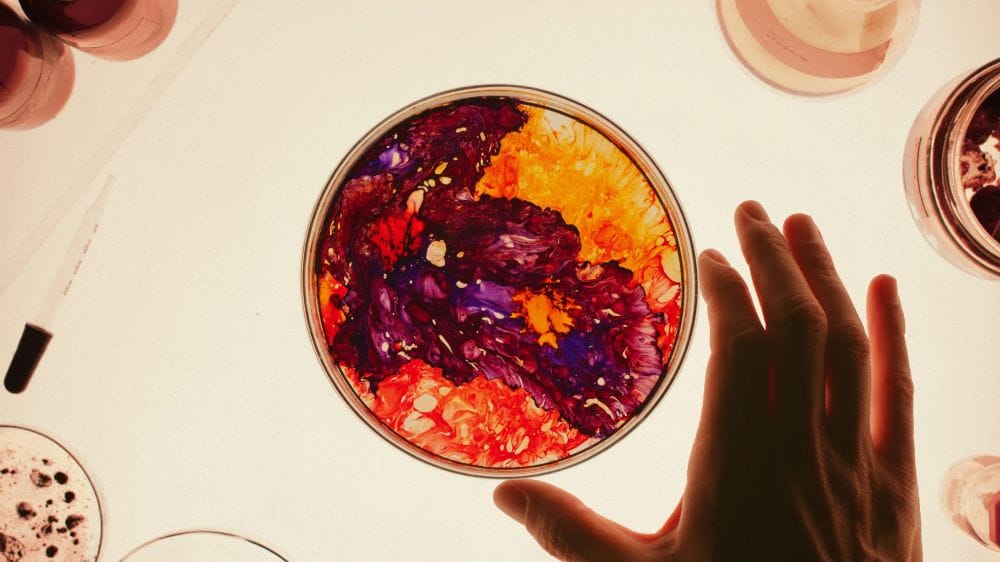
Phenomena opens with a line about how every image is "real”. No digital augmentation allowed. Very quickly, the boldness of that line bears fruit. Like a swathe of tie-dyed fabric viewed through a kaleidoscope, Gatti quickly throws a barrel of light, texture and sound at the audiences. Gatti speaks to amplify the natural wonder, narrating in a tone that is vocally, shall we say, robust; profound in a 3am at a houseparty sort of a way if you know what I mean. Kind of like how so many movies have talked about all of us being made of stardust, as if it was some easy shortcut to the appearance of wisdom. Except the genuineness with which he speaks is really quite alluring. It would be easy to be dismissive and cynical, and in some ways I reacted that way too at times with an eye roll or a scoff, but I ultimately found myself charmed. Like what David Attenborough might’ve sounded like if he ever went to a hippy festival in the ‘60s. Some may call it cosmic woo woo (and it is), but I also think its very personal sense of wonder is the sort of thing that is too often missing from this corner of the cinematic world. Experimental cinema can be very serious, so it's cute to see this stuff portrayed with such curiosity and wonder.
Featuring an original score by Rival Consoles and, most importantly, the liberal use of compositions by German musician Nils Frahm, Phenomena presents its visual refractions about as accessibly as you could get. The best comparison I can maybe make is the 23-minute sequence of David Elfick’s Crystal Voyager set to Pink Floyd’s “Echoes”, or something from Koyaanisqatsi, just, you know, zoomed in really, really close. One sequence involving particles being released by nuclear decay, matter returning out into the universe, looks like something out of Twin Peaks: The Return’s episode eight. Others look like visual concepts for science fiction movies and high-gloss music videos from the ‘90s. I think the IMAX documentarians of that decade will kick themselves they didn’t think of this stuff first. Additionally, an audio cue from 2001: A Space Odyssey is not accidental.
Even at 90 minutes, it is perhaps a bit long. Experimental films are typically short for a reason. And while Gatti’s work here is buffeted by the human voice, human interactions, human ideas (fanciful or tangible), it nevertheless does stretch the human attention, too. Phenomena is divided into ten sections—“light”, “gravity”, “matter”, etc; who can forget “electromagnetism”?—so you get a lot of (big) bang for your buck in that regard.
But I was impressed by what Gatti was able to achieve here. Especially for Australian documentary that can, at times these days, really struggle to lift itself out of the box prescribed by the need for mass marketability to television networks and streaming platforms. Funny, then, I suppose, that this started life as a digital production of the ABC. I don’t claim to understand much of anything he puts forward, even if the script by Gatti and Joseph Nizeti is trying to make it as plain as possible. But that doesn’t really matter. There is a lot to enjoy here and it’s told in a way that is refreshing and with a unique point of view thanks in part to the patient editing of Gatti and Johanna Scott. It may not quite be the next canonical avant-garde documentary, but it’s a striking work and one worth exploring. And perhaps at a time where the mysteries of the universe feel at their least magical because of what this planet's keepers choose to do with it, maybe something that offers a gateway to such dazzling wonders at our fingertips, a reminder of what is capable, is just what we need.
If you would like to support documentary and non-fiction film criticism, please consider donating by clicking the above link. Any help allows me to continue to do this, supports independent writing that is free of Artificial Intelligence, and is done purely for the love of it.