Living on Camera: Madonna's Game of Truth or Dare Turns 35
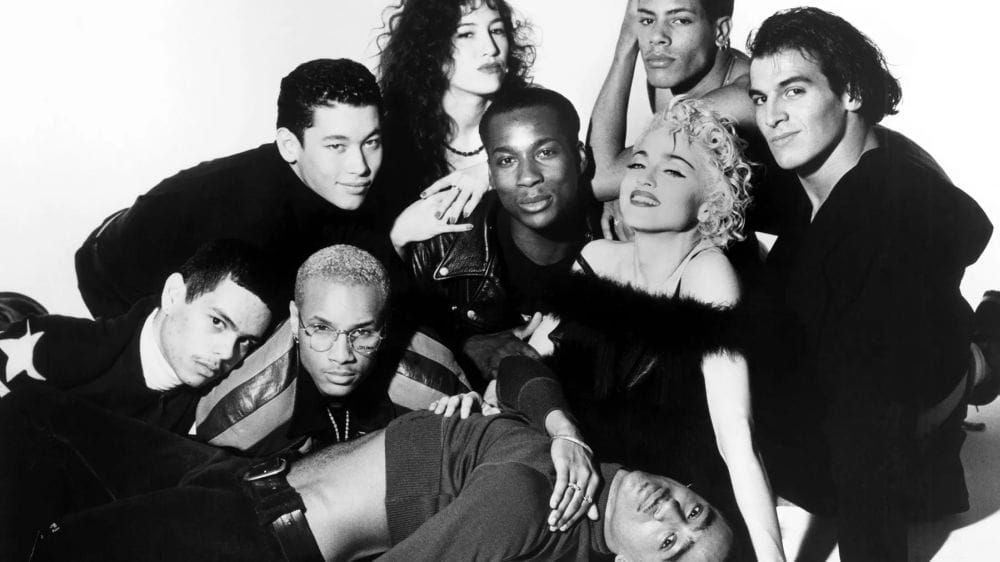
By the time that Alek Keshishian's Madonna: Truth or Dare was released in the United States on the 10th of May 1991, Madonna was approaching the end of what is considered her first near decades-long imperial phase. A period of all-consuming success, fame and artistic achievement. Two years prior in 1989, she had released Like a Prayer to chart-topping, culture-defining success. Something that has only increased as the years go by. In 1990, she appeared as Breathless Mahoney in Warren Beatty’s Dick Tracy—Beatty is an important figure looming over Truth or Dare, too—and it is considered one of her most successful cinematic endeavours. She released a companion soundtrack alongside it titled I’m Breathless that berthed the single “Vogue”. Yet another in an already stacked line on signature hits, and itself another culture-shifting Capital E Event. It was backed up by a black and white music video directed by David Fincher and inspired by Isaac Julian’s Looking for Langston that some 20-odd years later was hailed the third greatest music video of all time by Billboard. A Marie Antoinette-themed performance that year at the MTV Video Music Awards is equally, if not more so, the actual definition of iconic.
In November of that same year, she released The Immaculate Collection, a greatest hits compilation that covered less than ten years of musical output and yet sits up there with Their Greatest Hits 1971 to 1975 by the Eagles, ABBA Gold and Queen’s Greatest Hits as one of the highest-selling singles collections of all time. That album featured two new songs, one of which was the number one smash “Justify My Love”, yet another culture shift, its sexually explicit music video becoming the highest selling video single of all time (remember when those were a thing) after being banned from MTV rotation. Another example of shrewd marketeering from Madonna.
In early 1991, she sang “Sooner or Later (I Always Get My Man)” from Dick Tracy at the Academy Awards where she had attended with Michael Jackson. A five-minute performance draped in silver beaded Bob Mackie, inspired by Marilyn Monroe and later very pointedly mimicked by Sabrina Carpenter in 2024. The song, written by none other than Broadway legend Stephen Sondheim for the Beatty-directed comic strip adaptation, ultimately won the Oscar for Best Original Song. There are not too many original song Oscar nominee performances that get the sort of attention that one still receives so many years later.
So, by May of 1991, at 32 years of age—I hope my maths got that right—Madonna was not just the Queen of Pop, but just about the queen of everything. In between much of what I described (and more!), she had also embarked on her Blond Ambition World Tour from April 13 to August 5 1990, which had been a raging success and changed the landscape for popular music and rock and roll in ways that continue to be felt to this day. You don't get the likes of Taylor Swift’s record-breaking Eras Tour without it, and, alongside the likes of U2's ZooTV tour a few years later, it marked a significant turning point for live concert performance. It was hailed a "musical extravaganza" by the Dallas Morning Herald, and "the world championship of rock theatricals" by the Orlando Sentinel, with most critics praising its elaborate stagings, boundary-pushing costumes, and large-scale recontextualization of the stadium experience.
Madonna, of course, understood the value of the visual medium. That was obvious from the day she rolled around on the floor in a wedding dress at the MTV VMAs in 1984 to promote her second album Like a Virgin. Her music videos quickly progressed to beautiful, elaborate, often-times mega-budgeted affairs. From day one, her personal styling was vitally important to an audience that was increasingly exposed to celebrity more and more. When there are more television minutes, more magazine inches and more tabloid headlines with which to fill, you gotta do what you gotta do. But for her it never a case of trying to be relevant. She simple was relevant. Director Susan Seidelman’s Desperately Seeking Susan in 1985, an early career lead role opposite Rosanna Arquette, had solidified her bona fides among young fans as the face of cool and edgy, embracing a new image for the mid-'80s and quickly embracing the club sounds of the underground queer culture in particular on “Vogue” was a dam-buster for LGBTQIA+ representation in mainstream media. Something that Truth or Dare, would amplify to big screen, worldwide proportions.
It probably made total sense that she would push for a film about the Blond Ambition tour. And unlike, say, The Virgin Tour Live or Ciao Italia! Live from Italy, which were hits for broadcast television and videotape, this was to be a big screen experience. And it feels like it, too. Convinced by Keshishian, then a lesser-known music video director, to focus on both on and off stage theatrics, the film would eventually screen at the Cannes Film Festival and be distributed by Miramax across North America to, you guessed it, record-breaking success. The more traditional Blond Ambition World Tour Live, released in 1990, won a Grammy for Best Long-Form Music Video, her first Grammy ever and the first of two (a category record alongside Sting), as well as a ratings hit for HBO.
Madonna: Truth or Dare quickly became the highest-grossing documentary of all time at the domestic North American box office. A title it held for over a decade when Michael Moore’s Bowling for Columbine finally dislodged it in 2002. Internationally, it went by the title of In Bed With Madonna–apparently because the idea of “Truth or Dare” was considered just a bit too foreign for us. Even here in Australia, though, these days it does get called most commonly by Truth or Dare, so we’ll continue with that. In those very international territories it made around $14 million for a global total of just under $30 million. Which for a documentary in 1991 was practically Star Wars money.
Of Keshishian, Madonna is said to have followed her gut instincts that told her that he was a man of fresh ideas and was the kind of hip, cool artist who could lend the film the right edge, particularly following the early departure of David Fincher. Madonna largely self-funded and executive produced the project, clashing with Harvey Weinstein in the process, holding final cut–an important distinction considering much of the material seen in the movie is the sort that just about all other popstars would usually want removed. The final product is candid, exciting, funny, voyeuristic, and a tribute to Madonna’s work ethic as well as a shrine to her position in pop culture, her talent and, yes, her ego. Whether she is performing “Keep it Together” about the importance of family (biological or otherwise), or being threatened with arrest for on-stage lewdness, I find it rather impossible to come away from this documentary with anything other than rousing respect even if the way she goes about it is likely to rub some people up the wrong way. For however well it was received by critics at the time—Siskel and Ebert gave it two glowing thumbs up—that it was a movie about Madonna at all made it the target of suspicion and quite overt sexism. Yes, I’m looking at you, Golden Raspberry Awards.
But Madonna sparks a lot if intense reactions even to this day so it’s hardly surprising that what she and Keshishian had accomplished with Truth or Dare went over the heads of many. Or that they couldn’t see past their own snobbishness, sexphobia and misogyny to appreciate its virtues, which only brighten as the years go on.
Madonna: Truth or Dare was released just a couple months shy of the eight-year anniversary of her self-titled debut album. It’s an important note. The Madonna Ciccone that we see on screen isn’t the determined young performer of her youth speaking of wanting to take over the world, immortalised in abundant television interviews and dismissive press clipping of the era. Nor is she the more hard-edged legend that she would become in later years after her multiple eras of enviable chart success finally slowed down on the singles charts and a new generation of music listeners would no longer ‘get’ the tornado that was and is Madonna (at least not quite to the degree). In 1991, she was brash and rebellious, obviously a bit childish, but no less a totem of power. Like Diana Ross or Bruce Springsteen, she is a Boss. Keshishian is wise to show us all of these sides to his subject’s persona and the finished product went a long way to defining the very idea of Madonna that would linger in the public perception for many years. If the public are going to perceive her as but a sexed-up material girl, then she’s damned well gonna let them. And make bank in the process while the rest of us get to actually enjoy everything about what she actually is and hope the everyone else catches up.
But those who underestimate her are doomed to regret it, something we see throughout the film. Because through all of the snide remarks and the dismissing of her talents, predominantly from men—like a front row of scowling industry press at a Los Angeles performance or Kevin Costner’s “it was neat” that is maybe the most famous—Truth or Dare’s embrace of everything, the good, the bad and the fabulous, shows she’s smarter and more keenly tuned in to what makes for a good time at the movies than her broader filmography might suggest. The film is a Rorschach test of sorts. What do you see when you watch it? Whatever that may be, that's on you.
And then, yes, there is the music. Like the first big number that we get to see in crisp, rich colour of deep blues and blacks. Madonna emerging onto the stage via hydraulic platform onto a set constructed of industrial steel bars and cogs, resembling the Fincher-directed Metropolis-themed video of “Express Yourself”. Shirtless male dancers in unfastened workers overalls up front as she emerges dressed in a dark pin-stripe menswear-inspired suit over a belted, peach-coloured corseted bustier that peaks out through slits in the front of the suit jacket. Obviously, she holds a monocle up to her eye. Obviously. The crowd goes wild—and why wouldn’t they? The song is a classic. “All right, America!” she says, dubbed dialogue for American film audiences because the footage seen is actually from the tour’s final set in France. "Do you believe in love? Because I've got something to say about it, and it goes something like this." When she appears, it is exhilarating. The rush of rushes. It is here that the movie clicks on and doesn’t stop until the end credits.
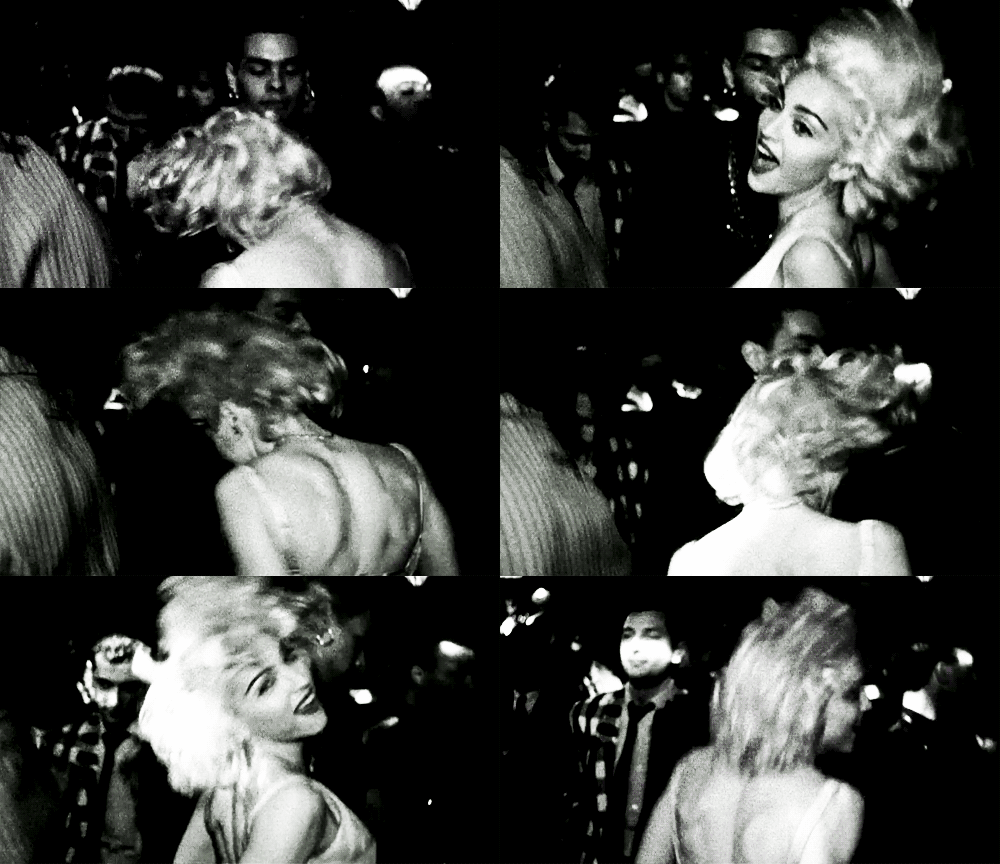
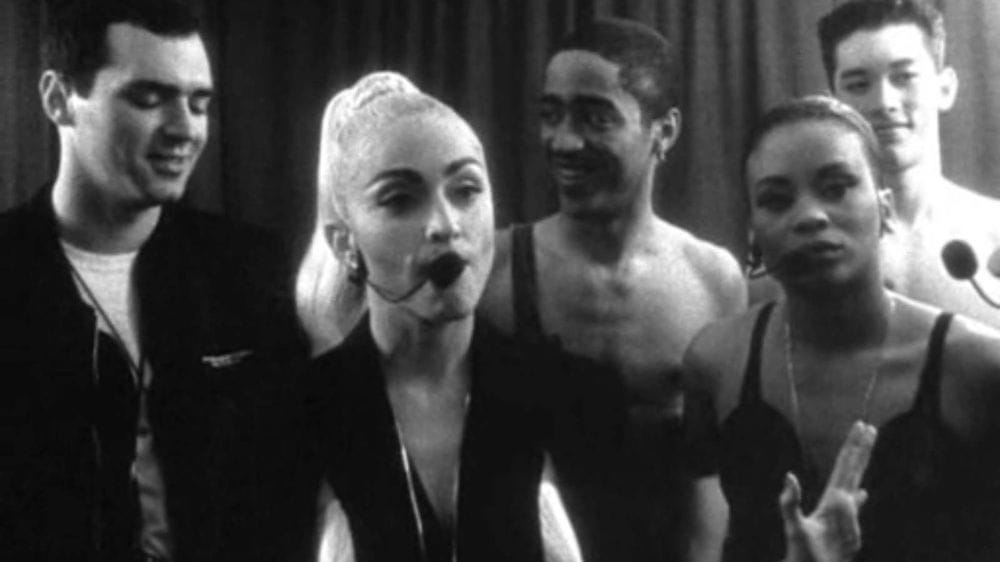
The crowd goes nuts every time she even approaches touching her body. Something she does throughout the performances. Humping, thrusting, grabbing, suggestive touching. Never more bluntly than in an Arabian version of “Like a Virgin” in her famous golden conical bra designed by Jean-Paul Gautier. It’s a far cry from the cloaked renditions of “Like a Prayer”, “Promise to Try” and “Live to Tell”, which provide some of the more emotional moments of the documentary. In stark contrast to the sheer joy of “Holiday”, which begins with Madonna emerging on stage from between her band as if parting the red sea all on her own, dressed in flared polka dots to boot. And what about “Vogue”, which is intercut with more black and white footage of Madonna, her backup singers and dancers celebrating life. As she sings in the song, “magical, life’s a ball, so get up on the dancefloor.” It’s pure electricity thanks to Madonna, yes, but also the editing of Barry Alexander Brown and John Murray who create a cinematic rhythm alongside the synths and strings that define its sound. Later productions made out of her concert tours would go too heavy on the frenetic editing, but here it’s perfect. Exaggerating the reality while remaining in step with the music and the ebbs and flows of its narrative.
The live scenes are all shot in glorious colour often with rerecorded sound that only heightens the difference between on and off-stage content. The movie has a host of cinematographers including Grammy Award winner Doug Nichol, Christophe Lanzenberg and Robert Leacock and The Texas Chain Saw Massacre’s Daniel Pearl of all people who I believe shot some of the Houston backstage footage. The on-stage sequences are often infused with what appear to be impossible angles, cameras embedded on the stage with Madonna and her dancers that produce results that seem hard to really picture being conceived without mass disruption to the show and its many, many moving parts. Again, maybe another meta commentary on the idea of “truth”. But they give Jonathan Demme’s Stop Making Sense a real run for the money, and make it hard to not judge other more static concert documentaries as a result. As an aside, I’m really excited to see what Billie Eilish and none other than James Cameron achieve with their upcoming concert documentary together.
Not to be outdone, the off-stage sequences are arresting, shot so gorgeously on what I have to assume was 16mm black and white film stock in a nod to D.A. Pennebaker’s work with Bob Dylan on Don’t Look Back. One might choose to see Shanghai Surprise or The Next Best Thing and chuckle at the idea of Madonna being a connoisseur of cinema, but I think it’s quite obvious that she is as evidenced with these sequences, aping a style that its entirely possible her target audience had never been exposed to before. Who’s That Girl was something of a remake of Bringing Up Baby, after all. Perfect Blue was visually sampled for her later Drowned World Tour. And here she was giving a spotlight to Pedro Almodóvar here in Truth or Dare long before he had become a household name beyond the arthouse.
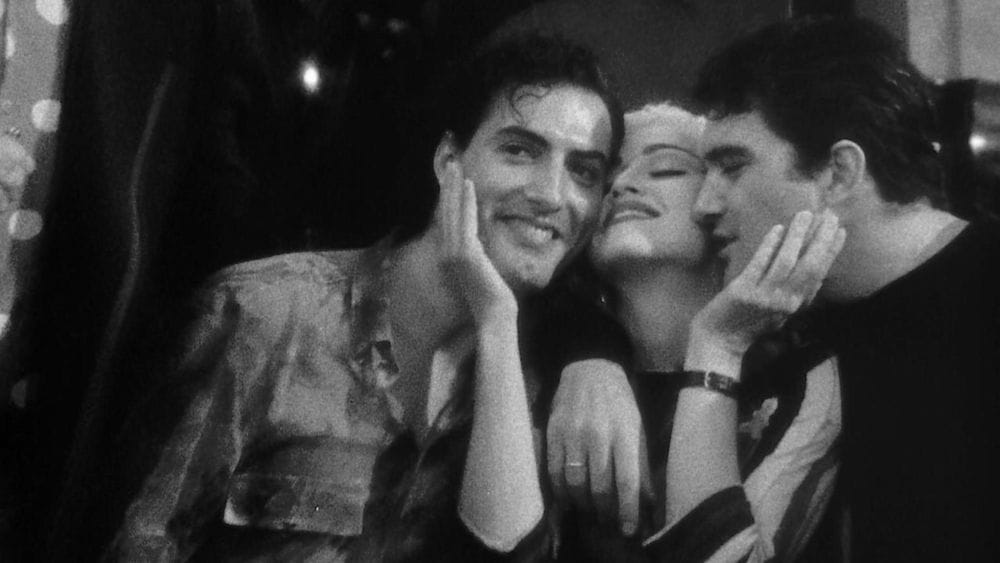
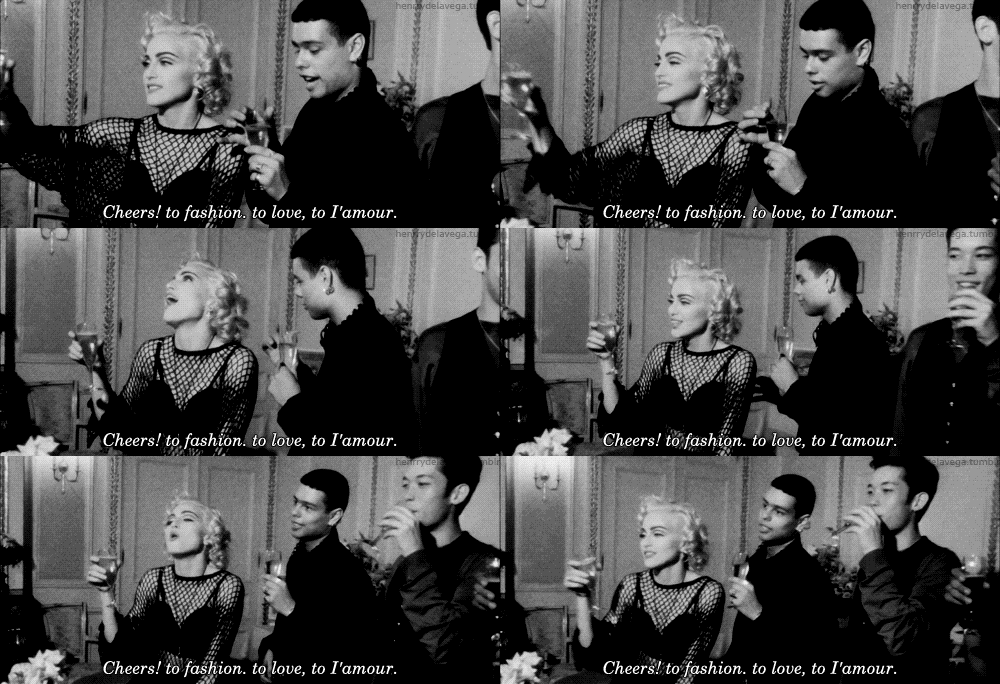
These behind-the-scenes sequences though are where much of the films more scandalous content is. Madonna fellating a beer bottle, playing teenage party games in bed with her crew, Madonna shading Belinda Carlisle and having weird interactions with family and old friends, and a sequence about sexual assault that plays very differently today that it would have then. And then there's Warren Beatty who in one sequence during a throat examination, he gives his then girlfriend a read worthy of Paris is Burning, coincidentally another documentary of the era with a prominent queer focus that had broken through to the mainstream just two months prior in March of 1991.
"She doesn't want to live off-camera, much less talk. There's nothing to say off-camera. Why would you say something if it's off-camera? What point is there existing?"
In fact, the one-two punch of Paris is Burning and Madonna’s “Vogue” single was seismic, really, for exposing the world to the ballroom scene with its black and brown queer, trans and non-binary folk. It’s easy to talk about Madonna’s cultural appropriation, her magpie tendencies in an era where it was harder for those without the means of big labels and brands to break through, but Truth or Dare shines as one of the peaks of her efforts to celebrate the underground scenes from which she was picking. I don't quite know how some consider this so malicious. Whether it’s her dancers openly demonstrating their sexuality and their unabashed freedom when touring the world, or the genuine, heartfelt exploration of their traumas, Madonna uses Truth or Dare to expose her fanbase and anybody else who’s paying attention, which was many, to this world. As she had done by putting HIV informational flyers in copies of her Like a Prayer CD, Madonna’s advocacy and unapologetically platforming of the quote-unquote "lifestyles" of those in her cultural orbit was genuinely brave. And the case has been made many times over that without her tireless work particularly throughout the peak of the AIDS epidemic, queer people wouldn’t be quite as far along as they are. Some don’t like to put so much emphasis on a cisgender white woman, but the proof is there to see, even if, yes, some of the language and the means of communication are dated. I mean, how many celebrity biographies would feature a minute of silence from an AIDS tribute?
Truth or Dare was such a moment that it even got a full 60-minute spoof from Julie Brown called Medusa: Dare to be Truthful featuring Kathy Griffin, Donal Logue and Bobcat Goldthwaite. With gag tracks like “Vague” and “Expose Yourself”, Medusa somewhat lovingly teased its subject long before Documentary Now existed. Madonna was not a fan (supposedly). Although it does now comes across as wildly more dated than its satirical target, while Madonna’s film remains modern and fresh so jokes on them, I guess. Because nobody ever really did do it like her ever again. Madonna herself would attempt something approximating this film with I’m Going to Tell You a Secret in 2005, directed by Jonas Åkerlund with Dago Gonzales, but like many things in Madonna’s professional career, she was rarely served especially well by repeating herself and it’s not nearly as memorable of a film. Although it is definitely still worth your time if you are at all interested in Madonna as an artist and as a provocation and as a cultural pillar of the late 20th century. The concert scenes are especially impressive! And especially if you have already seen Truth or Dare, the comparison between the two versions of Madonna is a narrative hook that I don’t think Madonna herself was too interested to explore in any meaningful way, which is disappointing.
Many pop stars would attempt something similar; their own Truth or Dare. But the key to Truth or Dare’s success was a subject who was basically daring herself to be as divisive and combustible as possible. To many a fan’s delight, of course, although the 1992 release of Erotica, the film Body of Evidence, and most importantly the SEX photography book would all be a bridge too far for some of her American fans and the media and she would have to work to get them all back on side. Among the many who tried their own version, Katy Perry perhaps surprisingly came out best—albeit a fair distance down the ladder. Letting the camera of Katy Perry: Part of Me (in 3D!) in 2013 witness her being told her marriage was over mere minutes before needing to go out and perform in front of thousands of people was the sort of dramatic novelty that many would assume Madonna might froth at. It's the sort of moment that every so often rises once more through the online viral cycles, a brief moment of professional recognition for Perry that has lingered beyond her own cultural capital these days.
Documentaries about Whitney Houston have proven bad after worse, while there are too many biographies to count about musicians that barely find the time to even consider being as honest and shocking as Truth or Dare let alone as entertaining. HOMECOMING: A Film by Beyoncé was great, although I suspect its subject wasn't as willing to open herself up to the cameras quite so much in its own brief behind-the-scenes moments.
The most successful of its imitators is most certainly Douglas Keeve’s Unzipped from 1995. Following fashion designer Isaac Mizrahi as he attempts a comeback from a disastrous runway season, Keeve uses an identical visual palate to Truth or Dare as a means of contrasting Mizrahi’s design studio, personal life and celebrity interactions in grainy black and white with the colourful world of the runway, highlighting its subject’s love of bright greens, pinks and oranges within his flamboyant designs. Unzipped treats fashion like an opera—or perhaps more appropriate in this instance, like a rock concert. Mizrahi is the star, the supermodels his backup dancers if you will. Both this and Truth or Dare also feature a rash of celebrity cameos. Replacing Costner, Al Pacino, Olivia Newton-John and Antonio Banderas are Richard Gere, Liza Minnelli and Roseanne Barr. Sandra Bernhard has a significant appearance in both. What circles she spun!
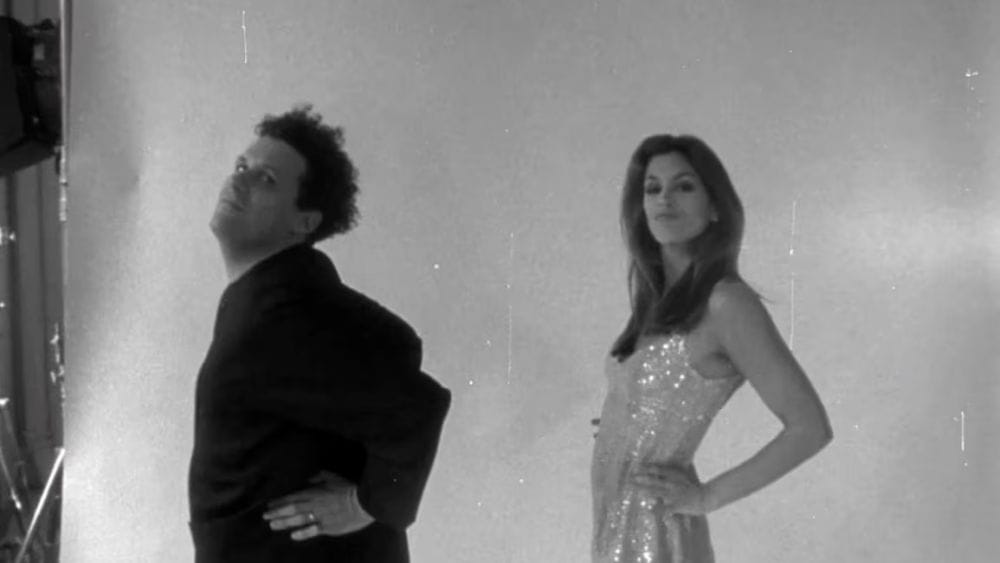
Mizrahi was apparently so unhappy with his portrayal that he and Keeve, who were dating at the time, called it quits—that divergence of opinion of the representation of their selves is probably the biggest discrepancy between the two although even Madonna herself has said she “sort of gags” at the thought of her behaviour as shown in the film. But it must be said, Unzipped is amazing. It’s fizzy, electric and hilarious. Probably the greatest fashion doc with a wild Earth Kitt for extra insanity. For this reason, it’s hard to really care too much that it so blatantly copies the Madonna film. I swear, a double feature watch party of the two would be as entertaining of an evening in 2026 as they would’ve in the ‘90s. Eat it up!
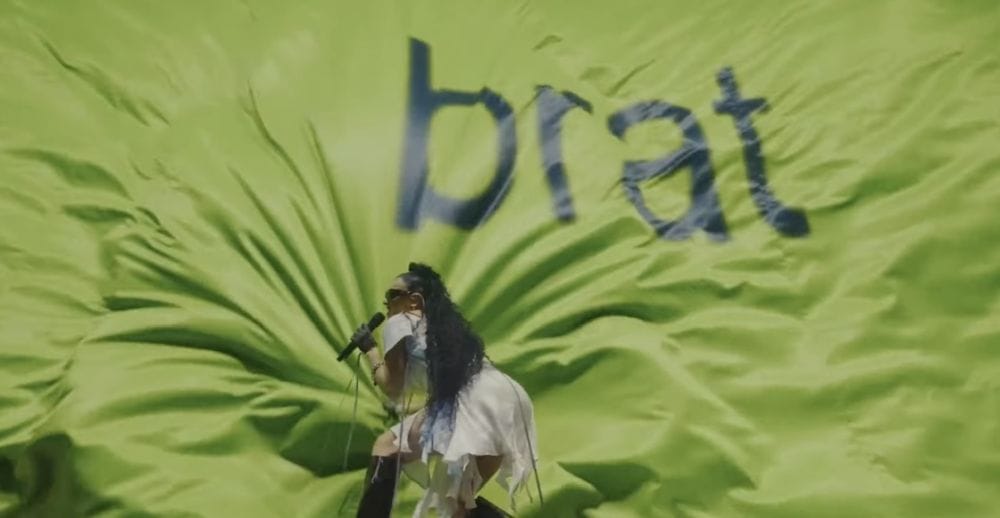
I also quite notable felt Truth or Dare’s influence in the 2026 release of The Moment, a faux take on the behind-the-tour film by someone who has quite clearly picked up the “brat” mantle from artists just like Madonna. Liberally poaching from This is Spinal Tap and other mockumentaries, The Moment finds Charli XCX and director Aidan Zamiri amplifying the singer's supposed preoccupation with drugs and family un-friendly material as she juggles with newfound mega-fame that has put cameras and spotlights onto her as she sets out to embark on a tour of her album, brat.
The two movies ultimately take very different paths. Despite its attempts at cinema verité, like Truth or Dare’s exaggerated reality, it’s really nothing of the sort. There’s nothing natural about any of it—and that shouldn’t necessarily be taken as a bad thing. Just don't think too much about why there are never any cameras around her when it cuts from a close-up to a wide shot. I probably would have liked some actual musical performances among the fictionalised comedy just to give audiences a bit more or what many of them likely came for. Still, The Moment and Truth or Dare each have something similar to say about the pursuit of artistic expression through the so-called frivolity of pop and dance music. Whether it’s Charli XCX’s on screen persona being corrupted by the sinister power of capitalism and industry envy, or Madonna in very real life standing up the literal Canadian police for her so called lewd and obscene on stage behaviour as well as the actual Vatican, they are each about the need to defend what artists want to say and how they want to say it.
Just as Charli finds (fictional inspired by assumed factual) antagonism in her movie towards the very things that charmed so many people in the first place with her brat era, so too did Madonna in real life from Pepsi and the church and Grammy voters and the radio stations scared of her sexuality and her age. To Madonna, even the thought of toning down her racy performance on the night her father goes to watch would be to compromise her artistic integrity. While Charli finds comedy in the corporate efforts to do just that.
I don’t think it is a misinterpretation to say that Charli is definitely channeling the Madonna of this era, even if The Moment somewhat misjudges what made Truth or Dare so special. Nevertheless, Truth or Dare and The Moment are each doing the unexpected and their own unique thing because that will always be the more interesting and lasting choice for somebody like them. Why just do a concert film when you could say something?
Keshishian’s film addresses the very complaints many would likely have about it right there in the text. Something that Madonna has done in her music and her publicity appearances before and since 1991. It’s what so many people love about her. You can tell they're cut from similar cloths because anything you’ve got to say about them, they’re already two steps ahead of you and these films are examples of that. I mean, Madonna literally asks you to "don't be a vibe kill" on one of her new songs, knowing full well there will be plenty who want her to shut up, put on slippers and enter a retirement home (at 67!).
So, when Warren Beatty says Madonna “doesn’t want to live off-camera”, what he’s kind of saying is that what people can see is what matters. And Madonna could see the changing tides of celebrity. With Truth or Dare she took it and pushed it to its most logical next phase. The brutal honestly that she demands of herself and those in the atmosphere around her remains fascinating to observe, even if in 2026 one can quite clearly see the manipulations on hand. But as audiences get served more and more sanitised, corporatised, estate-sanctioned biographies of the rich and famous to fill the libraries of streaming services while promoting Spotify and Apple Music streams, the unvarnished candour and the vulgarity and the sheer scale of Madonna: Truth or Dare only grows more impressive.
Together, Keshishian and Madonna created the magnum opus of this brand of celebrity documentary. Just a few years prior to Truth or Dare’s release, the Academy Award for Best Documentary Feature was won by Brigitte Berman’s Artie Shaw: Time is All You Got, a perfectly lovely film that is evocative of an era all its own. Truth or Dare was the future and was unsurprisingly not nominated for an Oscar. It was cited as a nominee for Best Edited Documentary by the American Cinema Editors, and it tied for third place at the National Society of Film Critics with the eventual Oscar winner of the 1991 season, Barbara Kopple’s excellent American Dream. But like the aforementioned Stop Making Sense, or the later Hoop Dreams or any other number of classic non-fiction that went unnominated, that’s hardly a symbol of anything other than a documentary branch that was, at least for many years there, staunchly insular and singularly minded in what they considered great documentary.
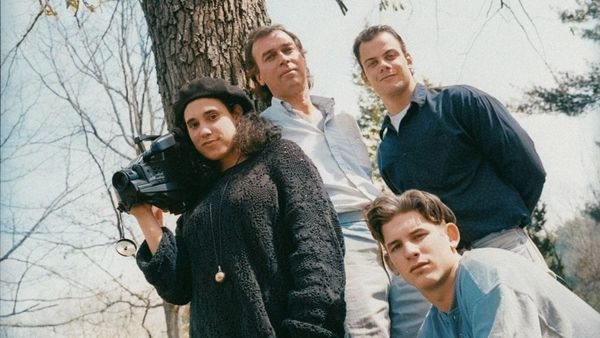
Madonna would swiftly move on as she was prone to do. Keshishian would leverage his newfound success to direct the dramatic feature, With Honors and Madonna would donate the song “I’ll Remember” to its soundtrack. He would also continue making music videos and eventually returned to the musician doc space with 2022’s Selena Gomez: My Mind and Me. The story of Truth or Dare would also continue in the 2016 documentary, Strike a Pose, which reunited the seven dancers that she had been the “mother” to 15 years earlier. Meanwhile, as I mentioned earlier on, this ‘90s era of Madonna has become a touchstone in queer history, typified by television series like Pose dedicating an entire season to the impact of “Vogue” and what Madonna had been able to achieve for so prominently platforming gay, bi, trans and queer stories.
The legacy of Madonna: Truth or Dare shouldn’t be up for debate just as her musicianship shouldn’t. I think these days, we’ve finally made it to a place where it’s lazier and more uninformed to not recognise the power of what Madonna achieved and what it did for the future of multiple artforms. That she was able to bring this film into the world and that it can stand just as tall as any of her other genius is the sort of thing that most artists would kill for. In three and a half decades since its release, none have come near its boldness, its frankness, its propulsive watchability. And like Pitchfork turning around and giving retrospective reviews of Madonna albums with scores on par with classic rock and well-established masterworks, time has been very kind to Truth or Dare. 35 years later it isn’t seen as some cinematic anomaly. It’s rightly considered a classic as it ought to be. And if people are still clinging onto the belief that it’s little more than narcissistic attention seeking, then it’s time to consider your biases. As Trent Straube said in POZ magazine: "This was 1991. Before the Internet, before gay marriage, before Will & Grace, before the Kardashian-reality-TV takeover of the world … Truth or Dare was some revelatory, groundbreaking shit. It changed lives".
If you would like to support documentary and non-fiction film criticism, please consider donating by clicking the above link. Any help allows me to continue to do this, supports independent writing that is free of Artificial Intelligence, and is done purely for the love of it.