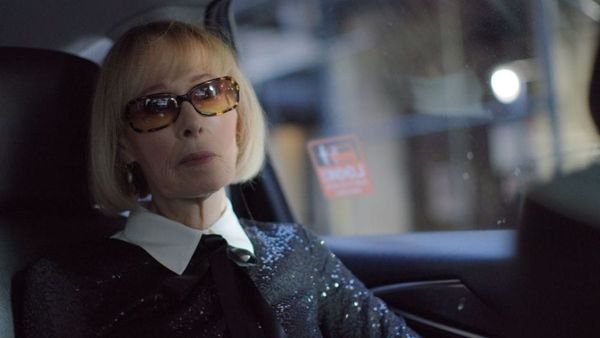
Mineshaft: The Cruising Murders (dir. Jeffrey Schwarz)
I have not seen Justin Firstman’s Club Kid to have anything to add about the discourse around that film. But if you want a conservative film by and about gay men, then watch Mineshaft: The Cruising Murders. Jeffrey Schwarz’s film not only manages to blame gay male sexuality for “the cruising murders” of its title—the one that largely inspired William Friedkin to make Cruising—but then also blames Cruising itself for more murders and then also finds time to ask the audience to sympathise with a killer (and potential serial killer) of gay men! Ending on a note of righteous activist power that suggests we wouldn’t have Heated Rivalry without the protests of the Cruising set in the summer of 1979 is yet another foul taste left in the mouth (ahem) by this misjudged documentary about one of the most interesting side-stories of the queer rights movement.
It’s a lot.
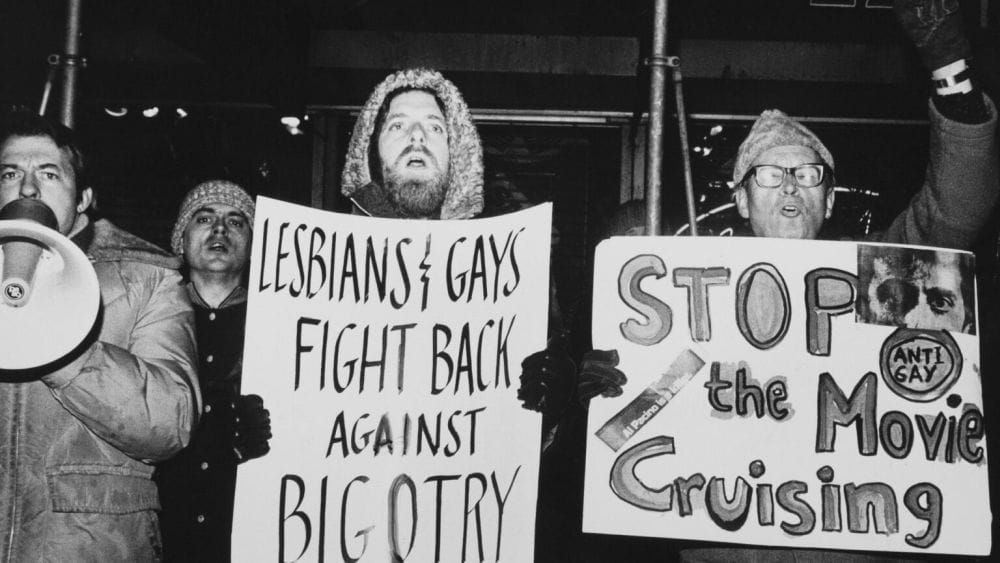
In 1979, William Friedkin set out to make Cruising, a sexually-charged murder mystery thriller set in the leather, S&M and broader gay community of downtown New York City. He had won an Oscar for The French Connection in 1971, and when making The Exorcist, the highest grossing movie of all time for a short stint, had worked with an actor named Paul Bateson. A morgue attendant who wears a studded leather cuff to work, his role was small, but left enough of an impression on Friedkin that, when Bateson was charged with the murder of Variety film correspondent Addison Verrill, he was inspired to write Cruising, casting a red hot Al Pacino in the lead role. Friedkin, a heterosexual man, had already made enemies out of gay folk with his adaptation of The Boys in the Band; a film I don’t especially care for beyond its place as a time capsule relic, but which was adapted from a pre-Stonewall play written by a gay man who doesn’t come in for as much guff as Friedkin does. Cruising was something else entirely. These gay characters weren’t just self-loathing sissies, but sexual degenerates and any of them could be a killer. Mineshaft covers the outrage to this, led by Village Voice writer Arthur Bell and taken to the streets by a community none too pleased by Hollywood using their sexual liberation as the backdrop for a violent, inflammatory exorcise in perceived homophobia.
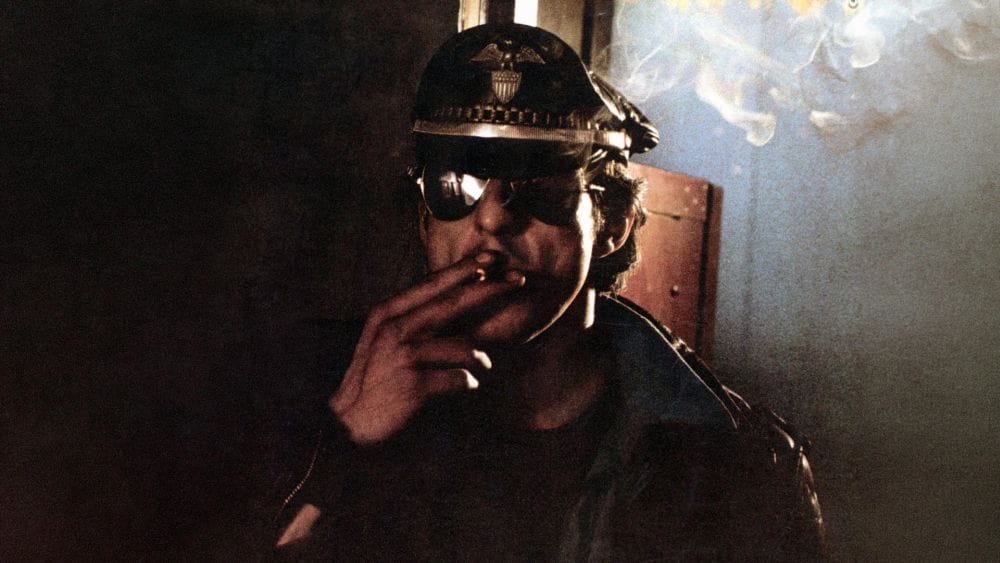
There is plenty of value in a film that takes a strong take on a movie like Cruising. No filmmaker owes their audience two sides on any issue. And whatever I may personally think of Friedkin’s film, I certainly wasn’t there at the time to ever truly understand the impact that its production had on the community. Cruising is an angry film built out of questionable politics for its time. As one talking head says, Cruising “shows gays as evil killers — how about the evil of the people that kill us?”—and you know what? They’re right. I certainly do not begrudge those who chose not to see the film then or since given its foundations in tragedy.
And, look, one has to be thankful they didn’t try and stretch this particular take on the story to the sort of unnecessary lengths of many streaming service true crime titles. Although its story would be a particularly fascinating part of something larger, Mineshaft’s brisk 85-minute movie doesn’t wear out its welcome like perhaps last year’s Murder in Glitterball City.
But Schwarz seems very content to let quite incendiary ideas be put forward with little push-back. Addison Verrill’s ex-boyfriend very clearly blames his former partner’s death on his kinks. Not only that, but he was killed by a man who claimed to place the blame on a gay community that, in his eyes, put more value and attention on transactional sex than emotional relationships (sounds familiar!). Nobody in this documentary uses the word “kink-shaming”, but some of its interviewees sure do seem to think it. And then the film really burrows in, blaming Cruising for a nightclub shooting in late 1980 where a straight man shot and killed two and injured more outside The Ramrod bar in the Greenwich Village. The killer claimed to hate gay people and wanted to kill them. The film does not present any evidence that he had seen Cruising. Mineshaft seems to be doing the very thing people accused Cruising of doing.
And then to top it all off, we get a friend of Bateson, the “cruising killer”, proficiently denying he was the serial killer that murdered and dismembered at least six other (presumed) gay men, but that he was just a lovely bloke. It truly does weasel its way into a “father rides jet ski” moment, claiming Bateson was just a nice guy with photos of his smiling and enjoying life post release. Life imitating life imitating art imitating life or something like that, I suppose. But Schwarz is so uncritical of it all, and seems quite content to allow gay sex and Cruising more prominently to be the real villains in this terrible story and not, as that quote I mentioned earlier would suggest, the evil of the people that killed so many LGBTQ men and women (and still does).
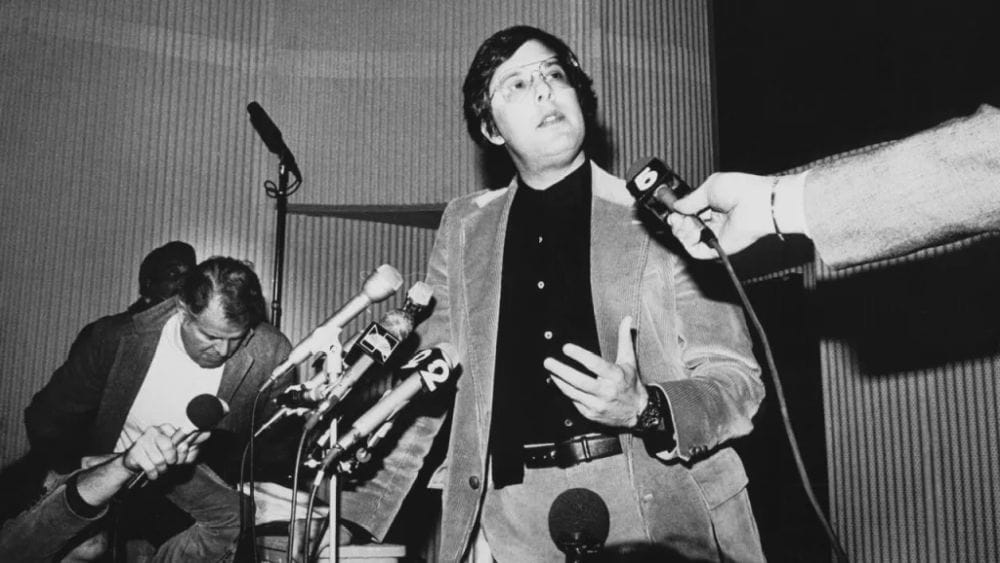
I guess Schwarz has no real need to look at Cruising critically. Even with a tacked-on nod to its cultural re-appraisal, it seems quite obvious that the filmmaker is not in any mood to (to paraphrase Marsha P Johnson) pay it any mind. Which is a shame, because beyond the “problematic” aspects of Friedkin’s film—problematic then for different reasons than it is problematic now, probably—that Mineshaft is very keen to highlight, there is something altogether fascinating there that’s worth a genuine deeper dive into. Given Schwarz’s history of lovely if fairly shallow documentaries about iconic queer names and stories (Divine, Tab Hunter, Allan Carr, Gloria Swanson), I probably shouldn’t have expected too much on that front. But it is really unfortunate that the best they could do is some Instagram shots of sold-out repertory screenings and a couple of indie filmmakers (hello Adam Baran!) who get to speak eloquently albeit briefly on Cruising’s contemporary position as a queer time capsule. Especially so of a time and place that was wiped out just two years after the release of Cruising by the onslaught of HIV and AIDS. The doc is filled with wonderful archival footage of that era and the protests, There is no doubt plenty of images to marvel at—Cruising, too, it must be said, is a fantastic looking film and Schwarz, acting here as editor as well as director, has a good time juxtaposing it with the real thing.
It’s worth noting that the Melbourne Queen Film Festival, at which I saw this documentary, has played Friedkin’s film twice in several years including ahead of Mineshaft this year. The previous time, at which I was in attendance, there was a deep, investigative look at the film by the late film historian Lee Gambin, which was a stronger and more entertaining exploration of its legacy than this film. Friedkin had spoken about the film plenty before his death in 2023, audio of which does appear here thankfully. Al Pacino has never spoken a public word about it, supposedly scarred by the violence surrounding its production and the perceived changes to the film’s intent in post-production that altered the performance he thought he was giving.
I found it a real shame, although reviews suggest I am in the minority. There’s so much worth interrogating with Cruising, an artifact that shouldn’t be seen as quite so black and white. Even so, and purely by accident, Mineshaft illuminates a light onto Friedkin’s film that at the very least suggests its reputation as a definitive queer text (for good or bad) is justified. Whether it wants to admit that or not.
If you would like to support documentary and non-fiction film criticism, please consider donating by clicking the above link. Any help allows me to continue to do this, supports independent writing that is free of Artificial Intelligence, and is done purely for the love of it.