Making Marie Antoinette (dir. Eleanor Coppola)
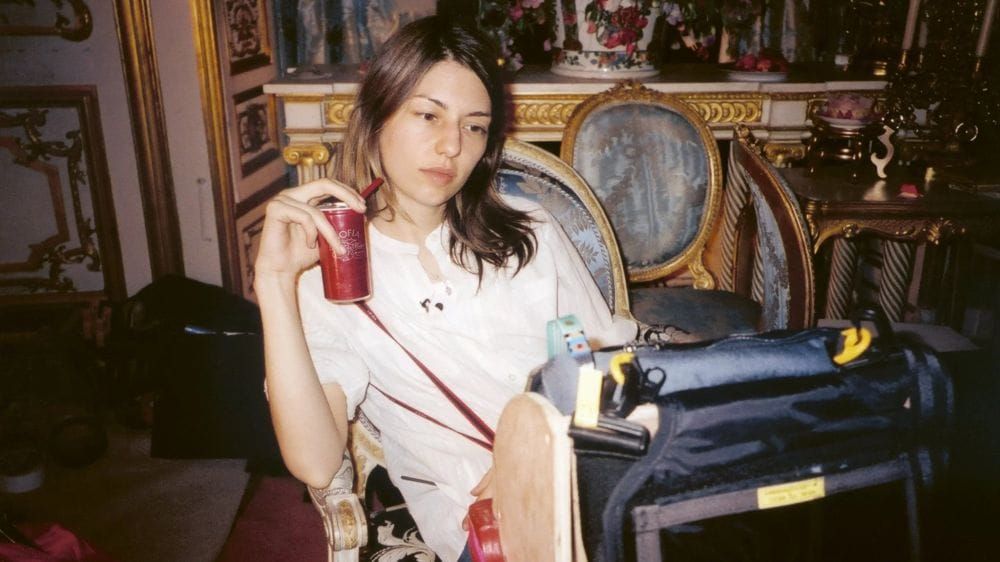
For whatever led Eleanor Coppola to sit on her immense wealth of behind-the-scenes material from the set of daughter Sofia’s 2006 feature Marie Antoinette, it appears that the timing is just right for a two-decades later revisit. The junior Coppola’s film, a historical period feature with Converse sneakers and a New Romantics soundtrack, has since largely escaped the scornful cage within which it was placed upon release; the victim of, in part, an early clash of ‘eat the rich’ and ‘nepo baby’ discourse before the culture really knew how to weaponise such things for engagement. Something that Coppola has had to deal with ever since Lost in Translation, really, but was amplified by her sympathetic take on one of history’s most villainised women.
And then of course there were the anachronistic stylistic choices that Sofia Coppola made that in many cases confounded, confused and out right angered many (predominantly male) critics and viewers of the time. The film sits at “rotten” on Rotten Tomatoes with a score of 58%, which is a generous figure given many of the positive reviews have been added retrospectively. A quick scan backwards shows a lot of vicious readings of Sofia Coppola’s critique of the pretty, gilded world that Kirsten Dunst as the teenage Marie Antoinette found herself swirling within. Not for nothing, my co-hosts and I discussed the film and in particular its soundtrack on the radio show Strictly Soundtracks in June last year—go check it out!
Eleanor Coppola has since died and so what began as a COVID-era project to assemble this footage into something has since fallen on Sofia to complete. An incestuously circular cycle of art that has become something of a cause of female filmmakers in the process. It’s a theme that runs throughout Making Marie Antoinette, surely not by accident. On one side, you have the Coppola matriarch musing—voiced by Diane Lane, taken from Eleanor’s on-set diaries—on her own creative endeavours in an industry that didn’t provide such opportunities very often to women and then especially so once they have children. On another side, you have Sofia who admits to a certain level of self-doubt about her ability to keep this ambitious undertaking afloat when she had become known for small-scale dramas that relied heavily on mood and a very contemporary gaze. A filming schedule of 70+ days including the exceptionally rare opportunity to film at Versailles, hundreds upon hundreds of costume and wig changes that result in a film production’s worth of lost shooting time, elaborate and painterly mise-en-scène, and what turns out to be a case of bronchitis for Sofia.
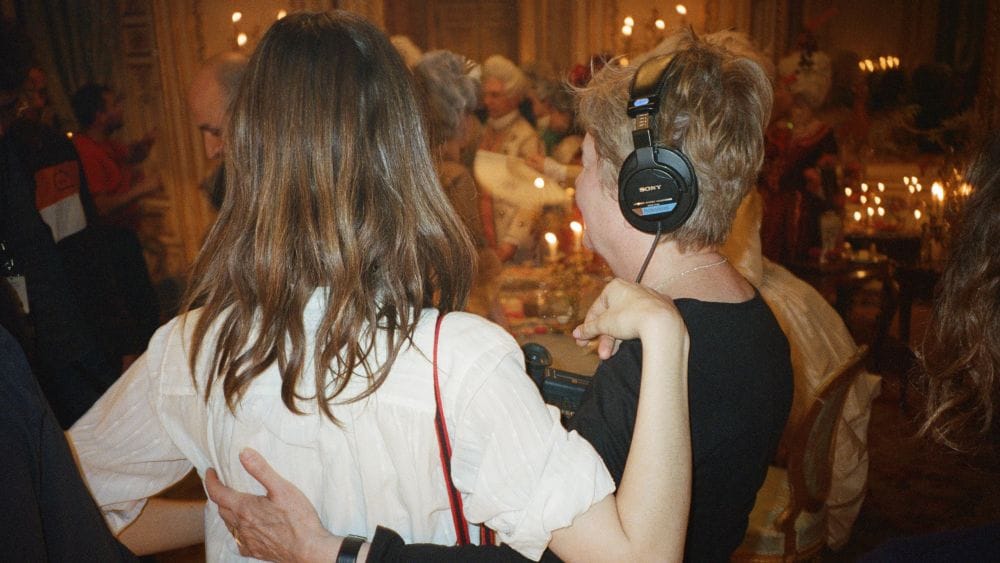
Despite the male energy that permeates the set (including when Francis shows up, the encouraging dad), Eleanor Coppola’s low-res digital video quietly sneaks around the set and captures women in moments of power as well as distress. Sofia is the film’s prime on screen focus, but the documentary finds plenty of moments to celebrate the contributions of Dunst and fellow cast members like Marianne Faithfull (directly bantering with Eleanor, who she calls by name), Milena Canonero from the costume department and even a deportment expert who teaches Judy Davis how to properly bow.
Eleanor herself does appear—often captured in palace mirrors lugging her large camera around through the chaos of Versailles corridors that have been transformed into make-up stations, and sets not having enough extras because they take too long to get ready. As she has done for most of her career, Eleanor Coppola keeps to the shadows. A film’s-end caption notes that at 80-years-old, Eleanor became the oldest first-time narrative filmmaker with Paris Can Wait, which is about as attention grabbing as she ever got even as the director of Hearts of Darkness: A Filmmaker’s Apocalypse, widely credited as one of the great documentaries about film ever made. The footage here is low-res digital video, but watching this in the cold light of 2026 and I was struck that this was not just EPK b-roll footage. Perhaps its just the editing of Aaron Matthews, successfully building out the story of Coppola and Coppola together; Eleanor as proud mother, watching her daughter undertake this extraordinary vision. Meanwhile, Sofia, assisting to bring this film to completion, is clearly proud of her mother in return, paying tribute to Eleanor by gifting viewers one more chance to experience the way she sees the world and in particular the world of filmmaking.
If rewatching Marie Antoinette twenty years later just affirms how ahead of her time Coppola was in subverting the story of the French queen and situating it within an opulent gossipy high school cafeteria, Being Marie Antoinette only heightens the achievement. Eleanor Coppola’s footage, and the words she wrote in private alongside them, take in all of the French classicism found in the architecture and paintings of Versailles, the decadent desserts and the elaborate costumes and finds a very different story within them. That of a different young woman embarking upon her own destiny of sorts, fulfilling her own dreams and ambitions. And doing so in an age not all that far removed from a time when Eleanor herself likely had her own creative ambitions scuttered by an industry that likely treated her frivolously as a teenage girl in the royal court.
If you would like to support documentary and non-fiction film criticism, please consider donating by clicking the above link. Any help allows me to continue to do this, supports independent writing that is free of Artificial Intelligence, and is done purely for the love of it.