Sydney Film Festival: Time and Water (dir. Sara Dosa)
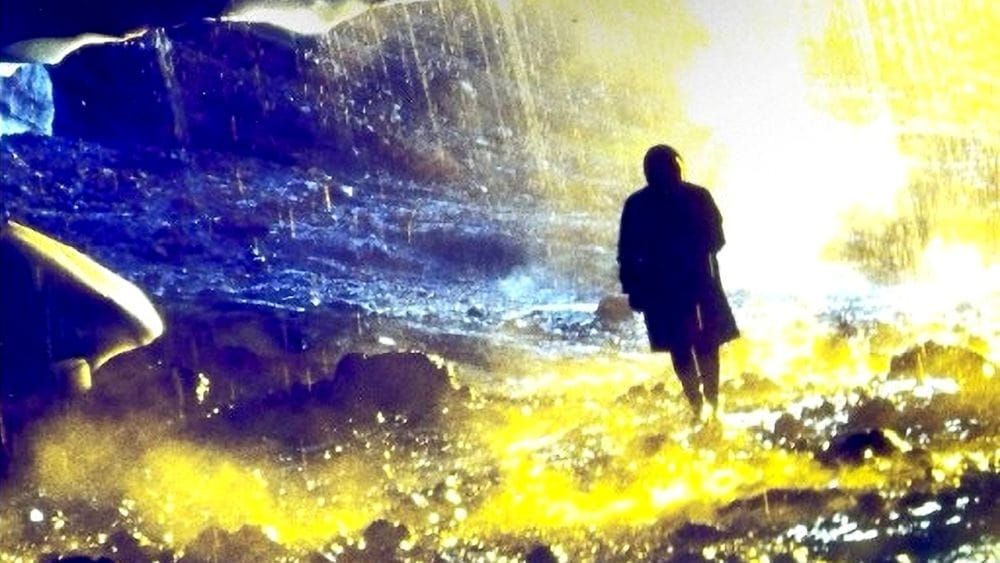
Trading fire for ice, director Sara Dosa returns with a documentary that once again merges the personal with the natural. Here, she lays one family’s experiences of life across generations in Iceland with that of the melting glaciers that have come to define that country in these times of rapidly evolving climate change. Iceland is, after all, on the frontlines of global warming and a proverbial canary in the coalmine of our planet’s future.
Adapted, influenced, inspired by poet and author Andri Snær Magnason’s book On Time and Water, Magnason is also our narrator and guide through the history of his family. We learn plenty about them, including his glaciologist aunt and uncle, but while he may be well known in his homeland, if you don’t know him by name, it may trip a memory in your brain from 2019 when he was tasked with authoring the words to be put on a plaque commemorating the world’s first officially acknowledged glacier extinction when the Ok glacier (Okjökull) melted beyond return in 2014. Something of an environmental footnote at the time—I have no doubt the anti-woke crowd had a good laugh about; ‘look at these greenie lefties having a funeral for an iceburg!’ type stuff—it marked a significant moment in time and one I wish the film had have utilised as more of a narrative hook.
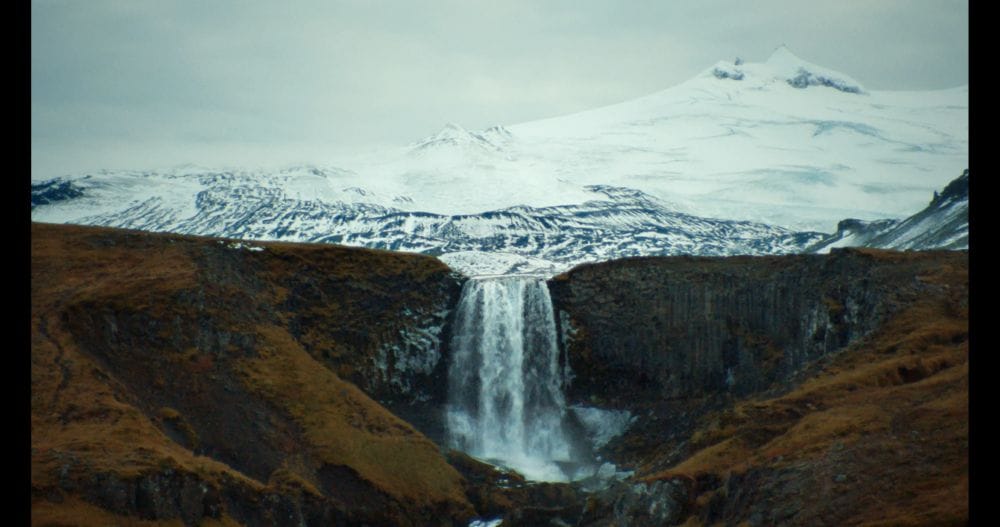
Dosa’s follow-up to her Oscar-nominated Fire of Love is another filled with arresting images, utilising the compelling beauty of Iceland to great effect even as the images become more and more apocalyptic; receding glacial landscapes and coastlines depleted of natural life where it had once teemed. Unlike that predecessor, though, Dosa, with her editing team of Erin Casper, Jocelyne Chaput and Mark Harrison, sometimes struggle to connect the two halves of Time and Water in a way that feels organic. As they stand, they are rather awkwardly paired. Even if using the loss of our loved ones over time as a metaphor for the loss of our environment (or vice versa) is a novel one, it’s honestly a bit of a stretch to correlate the Magnason family history with that of Iceland’s climate crisis. This man’s family is all very nice and lovely and the home movies we see recorded across decades are sweetly affecting, but the truth is there is also a whole lot of the family stuff that feels less than essential. Dosa is much more successful when not trying so hard and reminding us of the more simple majesty of our planet. The way bubbles in a block of ice can tell us about the Earth as it was hundreds of years ago, or the cyclical nature of water and how a melting glacier today could be the very water you or I drink in 30 years time.
The writing here works overtime to forge a connection between marriages, children, death and love with that of the swift evolution of our planet’s ecosystem, but the success of their pairing only really begins to bear fruit towards its conclusion. Together, Dosa and Magnason do eventually manage land on several profound moments as they relate to the passing of time. For example, when the two strands really come together nicely as Magnuson’s grandmother in her 90s and his own teenage daughter sit opposite one another, two separate human timelines shared by just a small number of years (certainly so in the grand scheme of life and the planet) and yet which reflect the rapid shifts faced by humanity. What could be imagined in the early 1900s versus the 2100s when Magnason’s child will be in her 90s is, I suspect, the sort of existential concept that Dosa was hoping to achieve here by this marriage of materials. It’s a remarkable thing to consider, and sadly not one that can be imagined with much hope given the facts at hand. It can be pretty bleak!
I do appreciate Dosa’s effort in not just making another documentary about climate change. Magnason notes at the start that this is, like his Ok plaque, a message in a bottle of sorts. Only time will truly tell if humanity was able to save itself from the destruction we have caused. Most of us will not be here to know the answer. For many, a film like this may be the only way for future generations to experience the majesty of the Iceland glaciers. To be able to truly comprehend their scale and their beauty. At one point, somebody notes the “smell” of a glacier at a certain time of the year, which is something I’d honestly never even considered. Dosa doesn't have any solutions for that, nor necessarily should she. But it is at times more preoccupied with the inner workings of its subject’s family tree to consider that there are far more interesting elements to focus on. While it is beautiful to look at, especially on a big screen, this mixture of time and water isn't the match that Dosa had with volcanoes just a few years ago.
If you would like to support documentary and non-fiction film criticism, please consider donating by clicking the above link. Any help allows me to continue to do this, supports independent writing that is free of Artificial Intelligence, and is done purely for the love of it.