Sydney Film Festival – Aanikoobijigan [ancestor/great-grandparent/great-grandchild] (dir. Adam and Zack Khalil)
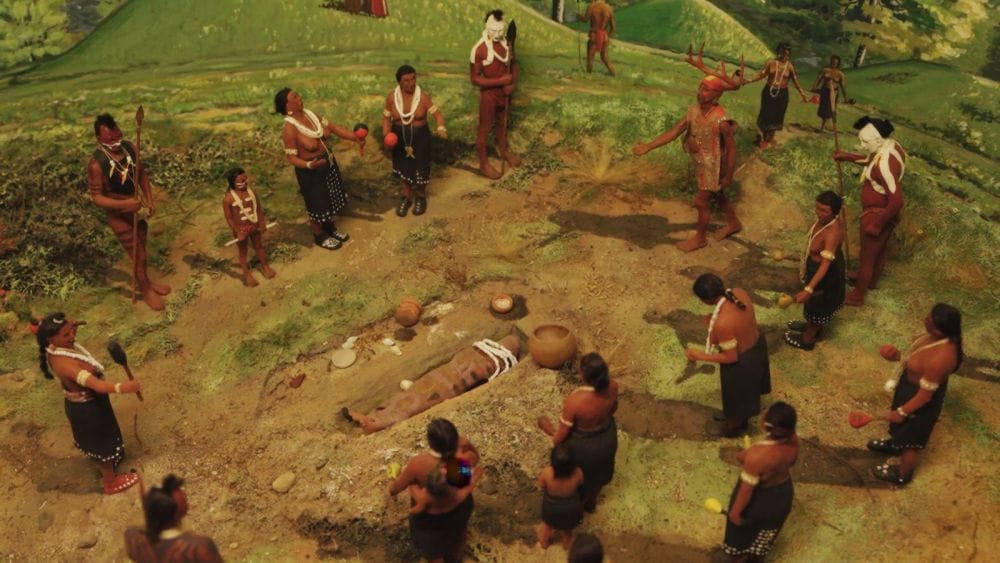
The plight of First Nations people across the globe is a sadly all too familiar. Colonialism is hardly original, and the way indigenous populations have suffered at the hand of those who sought to use them as human guinea pigs even after death has been seen in just about every country on earth by those who claim to be men of science. Even in 2026, as we are told in Adam and Zack Khalil’s busy documentary curiosity, Aanikoobijigan [ancestor/great-grandparent/great-grandchild], archaeologists continue to stonewall First Nations people who seek to be repatriated with the bodies, bones and the artifacts of their ancestors; forever left to sit in air-conditioned archives, pulled out of storage every once and a while before then promptly returned while their descendants are forced to beg and plead for an ounce of decency in death. Even with laws on the books from 1990, federal requirements for institutions to return human remains to their ancestral communities, they face obstruction and systemic racism.
Again, sadly all too familiar.
Before its Sydney screenings, the Khalil’s film played in the NEXT section of the Sundance Film Festival, a strand known to promote formally playful works. And that’s what Aanikoobijigan is, a formal experimentation. And while I am usually one to encourage such directorial pivots from documentary norms—especially as we are told early on that, for those portrayed here, time is not parallel, something that really opens up storytelling doors—in this instance, the Michigan filmmakers were simply doing a bit too much. In such a way that, for a significant chunk of its 80-minute runtime, distracted from the story. I gather this is the sort of cinematic subversion that is a staple of their nonfiction work, but a little bit can go a long way. A lot can be something of a nuisance.
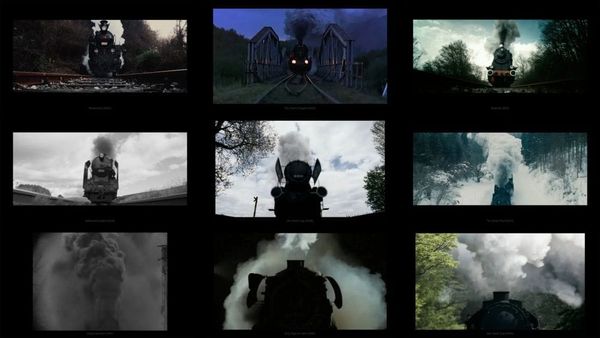
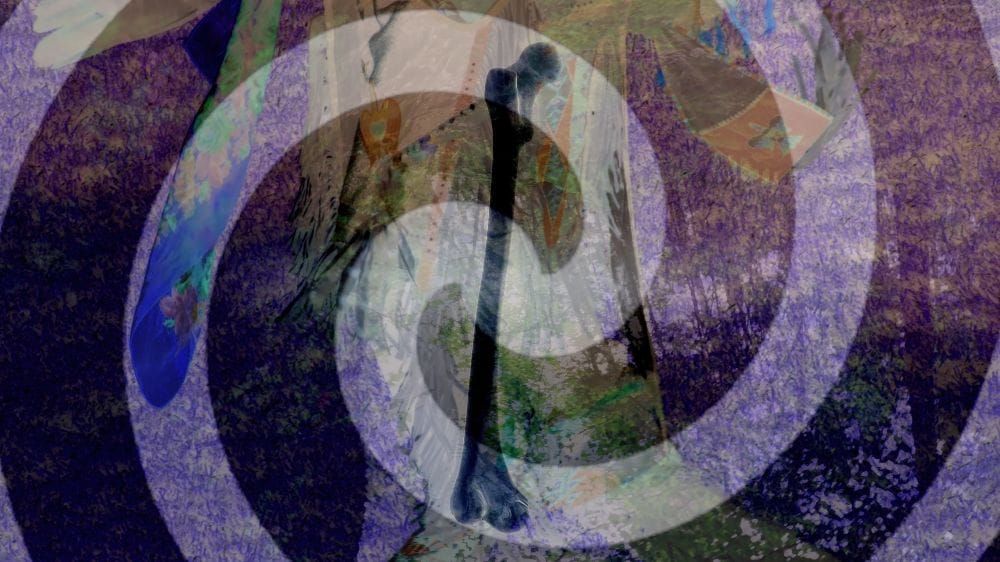
The filmmaking brothers, members of the Ojibway tribe and of the filmmaking collective New Red Order, always have something up their sleeve. There is always an hyperactive editing trick (the doc comes with a sensory warning), or a psychedelic graphic design tableau, or an unexpected electronic music suddenly booming too loudly from the speakers, or a classic movie clip (the Poltergeist franchise, Pet Sematary, The Amityville Horror, Indiana Jones) to smash cut to and from. The camera is constantly swooping and spinning and flashing. It’s a bit like Baz Luhrmann. And while it certainly works as a means of taking something that is a tough subject and making it feel less like ‘homework’, it’s only once it all settles down in its final half an hour that the full weight and emotional impact of its story really comes into the light.
I thought of Mati Diop’s Dahomey, one of the best films of 2024. That film about the return of artifacts to Benin had its own unique narrative device, with its ghostly voice from beyond the grave. And yet even with that, Diop still found time for stillness and contemplation. I vividly recall scenes from that film of people sitting and discussing, which is probably not something I could say about many others. With Aanikoobijigan, I found myself wanting to interrogate those same thorny territories and dig deeper into the work of the Michigan Anishinaabek Cultural Preservation and Repatriation Alliance. I admire the boldness of the Khalils’ vision, but this didn’t work for me the way its sound and light show had no doubt intended.
If you would like to support documentary and non-fiction film criticism, please consider donating by clicking the above link. Any help allows me to continue to do this, supports independent writing that is free of Artificial Intelligence, and is done purely for the love of it.