Lumière, Le Cinéma! (dir. Thierry Frémaux)
Yes, that Thierry Frémaux.
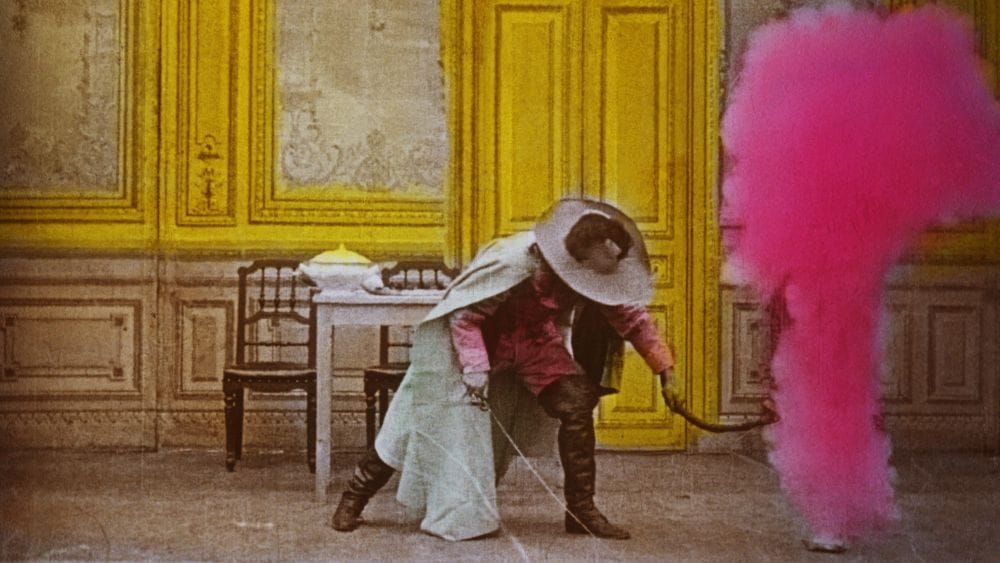
The Cannes Film Festival director’s second feature, Lumière, Le Cinéma! is a follow-up of sorts to his first, Lumière!, from 2016. Like that film, Frémaux, with his editor Jonathan Cayssials and Simon Gemelli, has assembled a collection of short films by Auguste and Louis Lumière, and their later collaborators. As well as Cannes, Frémaux is the director of the Institute Lumière and so the works of the Lumière brothers and their broader family and professional circle is unsurprisingly a passion. Pioneers of an artform, their works did more than just capture moving images and project them to audiences. They genuinely changed the world in a big and substantial way, as well as humanity more broadly.
Early on, it is explained of cinema that for the first time the world could visually experience things they had not physically stood in front of to see. Maybe that sounds quaint today, but it oughtn't. The story historically goes that audiences in the late nineteenth century were terrified of the brothers’ film of a steam train arriving at a station, thinking it was about to leap off the screen and crash into them. To some it may sound silly, but one thing that Frémaux’s film really got to the core of for me was just what a radical leap forward such a piece of work like L'Arrivée d'un train en gare de La Ciotat (or La Sortie de l'usine Lumière à Lyon, or Querelle enfantine, or...) really was. Whether the story of that 1986 film and its public exhibition is factual or just a haut conte doesn’t really matter. I sat and watched the anthology of about 100 50-second short films that make up Lumière, Le Cinéma! and I got it.
Perhaps never is it more simply defined than by the sensation I felt watching two otherwise mundane Parisian street scenes that are dwarfed by the Eiffel Tower. I’ve never been to Paris, but I know the Eiffel Tower is big. Like, big. I’ve seen it in movies and television plenty! And yet, as seen in these two static short films, it took my breath away. The way they were framed with city folk attending to their lives in the 1890s with this giant beast of metal looming over them, it just struck me. The angle, the position of the camera… it was like it was an entirely new concept to me. It’s maybe silly to consider being so profoundly moved by something that simple, but such is the magic of movies.
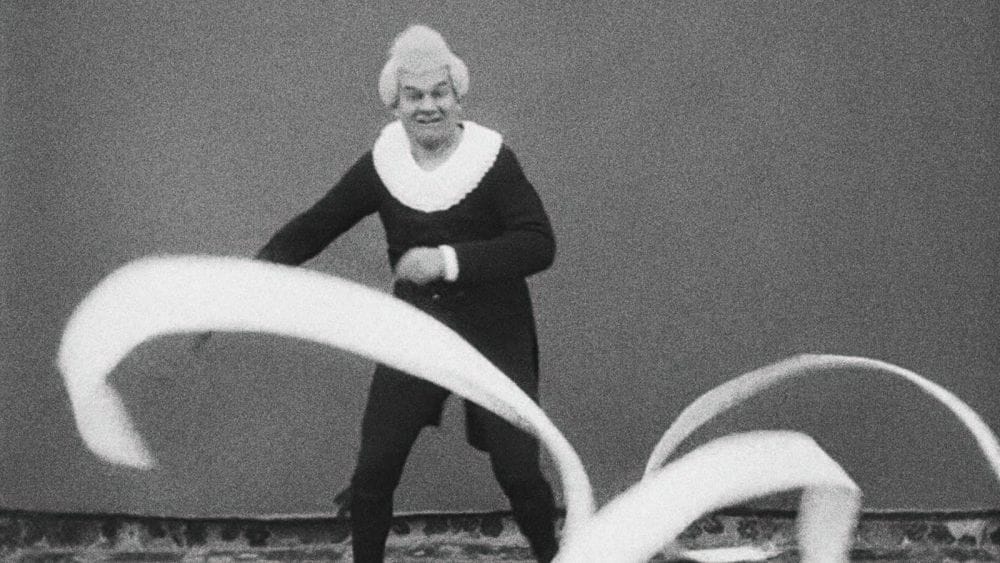
In fact, the entirety of Frémaux’s film made me extremely emotional. Maybe I was just in the right mood, but it was also affirming. I love movies so much. And to see all of these works one right after the other really underlined for me personally just how much of a miracle they can be. These are perhaps the most pure cinema you’ll ever get to see. Untainted by any of the advancements that would eventually evolve cinema into what it is today, I continued to marvel across its 104 minutes at just how historic each and every one of these (mostly) black and white moments are. They are all little miracles. Like, can I truly comprehend the lives that, thanks to the Lumières, were captured in a way that no person’s image had ever been captured before? They are not just period pieces, or people putting on costumes to tell a story. They're not even just old movies. They are the first. The people here, filmed deliberately or by accident (and those who were completely oblivious to it all) would have had no idea, no concept, of what was happening. Truly a moment of profound change. A change that would come to define my own life some 90-odd years later. These people—these real, living subjects—were there. In some funny little way it just blows my mind.
What must it have felt like to have sat down and watch these films in their day. The shorts have been so beautifully restored that we can really appreciate the placement of the camera and their artistic point of view. As a lover of documentary, I was overwhelmed by how the Lumières’ films capture what was both ordinary and extraordinary about live in the late 1800s and how their influence continues to be seen in 2026 (even if filtered through several generations of later influence). In his narration, Frémaux puts it quite gracefully: “Lumiére had a vision, he filmed the evidence of everyday life, of pleasures and days, weekdays at work, and Sundays at play, at leisure, at home and out. He puts his camera at the heart of life. His cinema is the people, their attitudes, their multitude.” This speaks to me as a lover of documentary and as somebody whose particulars lie in those films that do just that. Observation. Witnessing life. Capturing the essence of something so that we may feel enriched in some way. Their documentary work is about demonstrating the truly astonishing nature of our society. The subjects may be modest, but to film them and to do so so early makes them unforgettable. Movie magic. “They filmed cities, streets, people. You have to imagine the shock of the Western audiences when they discovered, through films, through gesture and movement, lands so far away and so beautiful.” Call me corny, but this film made me think about the big things in life. The friends and family and all the lived experiences that we will never ever know the feeling of and that the movies can attempt to evoke. It made me think about art and my love for this medium and what its purveyors can achieve that speaks to us.
It made me feel romantic once again for film and all that I desire it to achieve. I don't suppose anybody watching Lumière, Le Cinéma! needs the history lesson, but it's a reminder of something worth appreciating. And if Frémaux's own romanticism here is overly flamboyant, I appreciated that, too. The sincerity found here was a tonic. And as our world gets smaller and shorter through TikTok and whatever other social media feed we're all wading through, I find myself admiring anything that can cut through and light up my mind like this film did. And shorter than what I just scrolled past on Instagram! Whether that be some truly personal, profound introspection, or just something as simple as admiring the beauty of a landscape that perhaps now no longer exists to be admired. Or maybe I'm just being a silly goose. Who's to really say. Whatever the case, I thank this film for it.
If you would like to support documentary and non-fiction film criticism, please consider donating by clicking the above link. Any help allows me to continue to do this, supports independent writing that is free of Artificial Intelligence, and is done purely for the love of it.