Under the Flags, the Sun (dir. Juanjo Pereira)
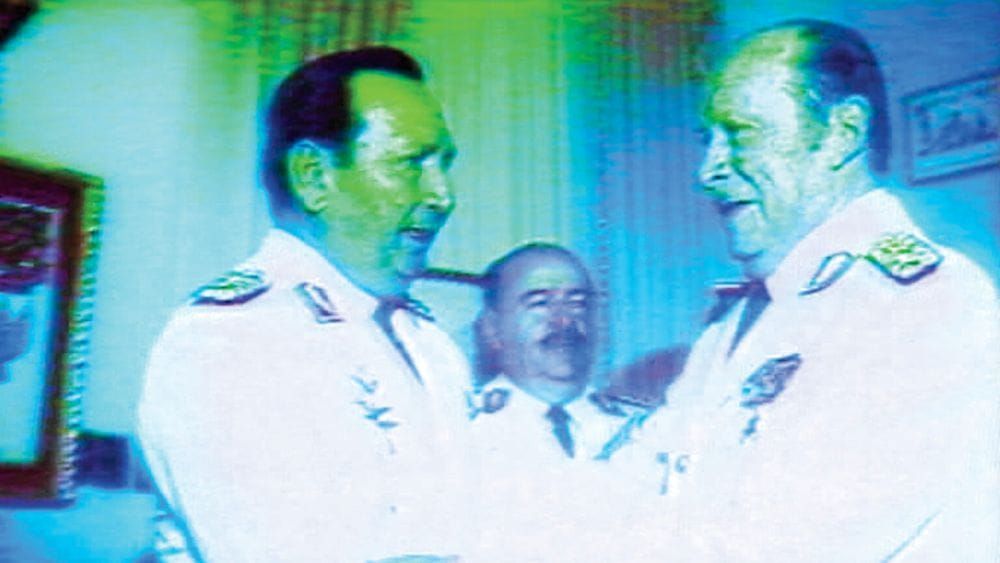
We are told at the start of Juanjo Pereira's Under the Flags, the Sun (Bajo las banderas, el sol) that little footage remains of Alfredo Stroessner's near-35-year reign of autocratic rule over Paraguay. Choosing to primarily rely on that which hasn’t been destroyed or disappeared requires Pereira, in his debut feature, to be creative and extremely focused. What he has created is something akin to the works of archival montage cinema by Sergei Loznitsa or Patricio Guzman’s The Battle of Chile, forgoing talking heads and narration in favour of a haunting, and damning, feat of political history. One that observes Stroessner’s time as leader through frayed, deteriorated and manipulated footage, propaganda, song and international indifference.
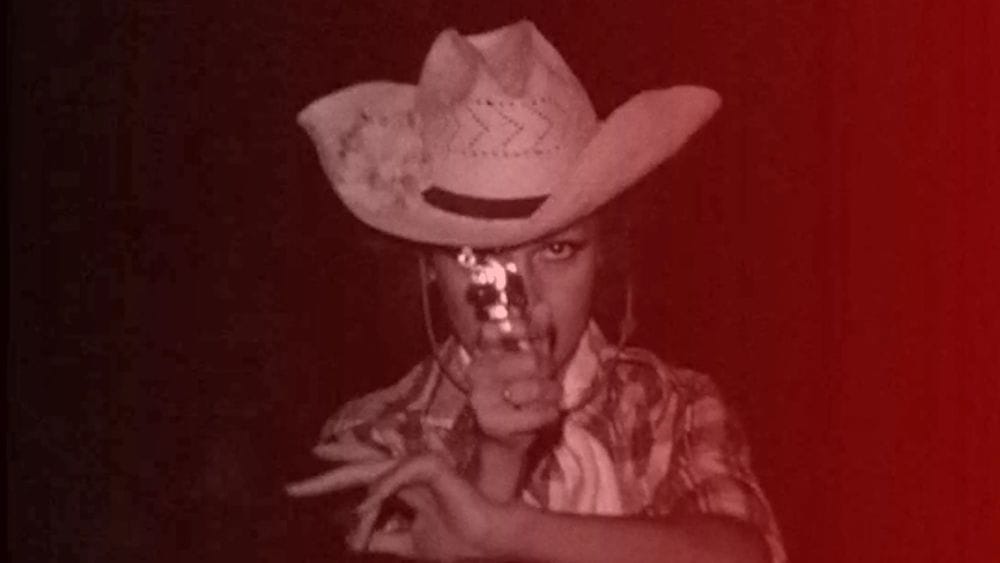
The resulting film is a bit like something found deep in the grimy bowels of a prison. A found footage documentary with the visual and aural landscape of some cursed horror film. The vibe here is decidedly sinister. Much of that has to do with the editing of Manuel Embalse, but especially the sound work of Julián Galay. The musical score, by Galay and Andrés Montero Bustamante, is one of those droning sorts that blurs the line between music and sound design, almost industrial and muffled like it was recorded at the end of a long, long room and played out of a phonograph. It has quite the extraordinary effect and pairs perfectly with the footage that skips across three decades in just 90 minutes and leaves a lasting impression of a nation that were trying to "blink if you're in trouble" to a world that seemed strangely glad to accepted him on the world stage—it's hardly surprising that the highest quality footage here is that of him in the United States.
Those looking for a more traditional telling of Paraguay’s history akin to the recent run of features out of Brazil (at least those that have made their way to places like Australia) will not find it here. Juanjo’s vision is more avant-garde than that, although it isn’t impenetrable to viewers with an interest in the region and an open mind to filmmakers with a vision beyond the nightly news reports. As well as Loznitsa and Guzman (his more recent trilogy about Chile and Pinochet does loom over this), I recalled Sandra Beerends’ They Call Me Babu about the Dutch colonial rule of post-WWII Indonesia (although it’s ultimately a much better end product than that one). Juanjo has also referenced titles I am not familiar with, like Mauricio Alfredo Ovando’s Still Burn and Mika Taanila’s Tectonic Plate. Juanjo is in many ways dictated by the footage that he has, a lot of which is fascinating to see—although I will admit not all of the choices of what he does with it made total sense to me. The heavy use of reverse-time video and audio, for instance; although that too adds to the film’s sense of unease so perhaps it worked.
One section that ought to capture people’s attention is that of Hotel Tirol, a resort for emigrant nazis where Stroessner hung out with Josef Mengele(!). The hotel basically acted as a sort of South American Mar-a-Lago and even if it is not explicitly stated—nothing here is explicitly stated—it once again highlights the frightening relevance of stories such as these to contemporary politics in ways that are unexpected and alarming. Juanjo was born after Stroessner’s rule, so that is hardly surprising. But it is just one of many effective surprises to be found in this sombre documentary. Its ending, newly shot footage of the symbolic remnants of a large statue that once stood many metres tall over the Paraguayan people, a moment of reflection for those who today seek to wield a fascist fist. One day they too will be gone and what will be made about them. I hope there are films as challenging and thought-provoking as this whenever they are.
If you would like to support documentary and non-fiction film criticism, please consider donating by clicking the above link. Any help allows me to continue to do this, supports independent writing that is free of Artificial Intelligence, and is done purely for the love of it.