The Voice of Hind Rajab (Kaouther Ben Hania) and Put Your Soul on Your Hand and Walk (Sepideh Farsi)
Two films about the Israel government’s war against Palestine take two vastly different yet curiously connected storytelling approaches. One is a more traditional narrative feature that could be labelled docu-fiction because of its use of real audio within a dramatic structure. The other is a documentary that doesn’t forego its non-fiction aesthetic—at times to a fault of its own detriment. One, surprisingly, comes backed by some very famous names that populate its end credits; the other, succeeds as much as it does by the face of its subject and little else.
Tunisian filmmaker Kaouther Ben Hania has become one of Africa’s most internationally prominent filmmakers thanks to Oscar-nominated films like The Man Who Sold His Skin and Four Daughters. The latter title took the form of documentary with extensive use of re-enactment and dramatic familial self-portrait to accentuate its true tale of female radicalisation. It’s something of an inverse to her latest, The Voice of Hind Rajab (صوت هند رجب), which uses real telephone calls made by the titular Palestinian girl to add urgent, tragic pathos to the true story of Red Crescent Society workers fighting to save her who are portrayed by actors is fevered, sweaty desperation.
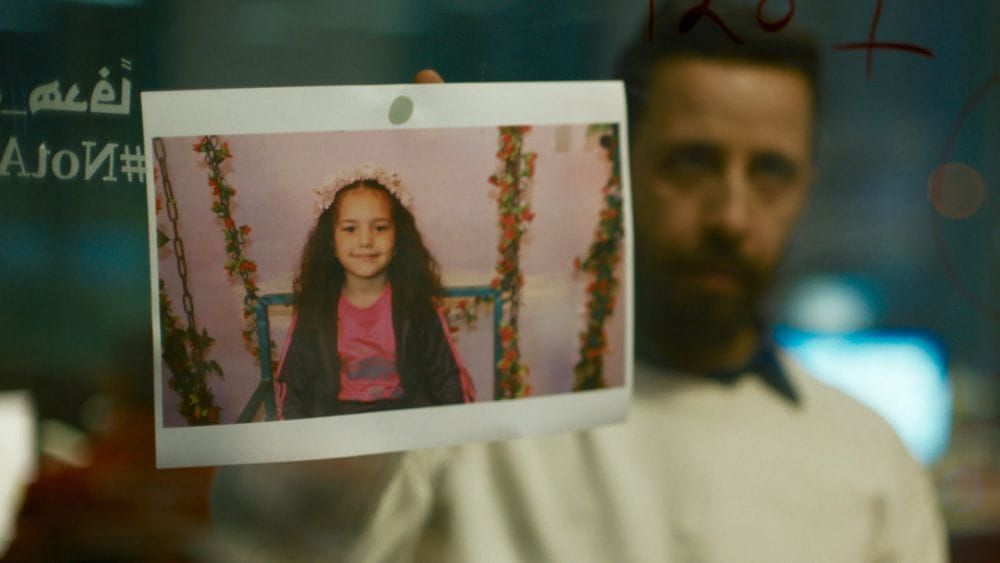
The use of audio recordings—not disguised, and in fact spotlighted both at the film’s beginning and again throughout—is arguably Ben Hania’s most important directorial choice in an otherwise tightly compact single-set feature. Even if it feels like it is in bad taste to talk about it as such. The actors including Motaz Malhees, Saja Kilani and Amer Hiehel interact with the .wav file recording like they are interacting with the real Hind Rajab. Her tortured words captured in digital recordings as she calls from the backseat of a car that has been riddled with bullets, seated among the “sleeping” relatives covered in blood. As the Red Crescent workers fight to get the green light to send in ambulance medical aid to rescue the girl, the audience cannot escape the girls’ voice and the stark reality of her situation as it plays out. As she lays frightened and injured, Ben Hania uses narrative conventions (no doubt inspired by the real happenings) to ensure we know the face that goes with the voice. She understands that to recreate this would he not only disrespectful to her memory, but a really, really bad filmmaking choice that would veer her film into exploitation.
Arguably, some may feel it still is. I don’t. In some way, I actually I felt the choice made the film more easily digestible as a work of cinema. Particularly for broader mainstream appealing audiences that its 24-in-an-office aesthetic suggests it could reach. There’s nothing here to hide the horrors of the war in Gaza from us, which is obviously hard to stomach and impossible to distil into just a 90-minute film. But by using the audio recordings that became such a symbol of the Palestinian suffering (Hind Rajab’s name was even used prominently in the events depicted in Kei Pritsker and Michael Workman’s The Encampments and has her own Wikipedia entry), The Voice of Hind Rajab escapes tortured dramatics and replaces it with cold hard facts. It’s easier to avoid the truth when filtered through constructed mise-en-scene. Here, the audience can’t avoid it and can’t dismiss it away as just cinematic invention. As a work of narrative storytelling, it uses the reality of documentary in a way that gives audiences both no way to avoid the reality and yet a necessary remove to endure a story of such grim reality. It’s a smartly effective technique and a powerful evocation of non-fiction tools to enhance dramatic narrative filmmaking.
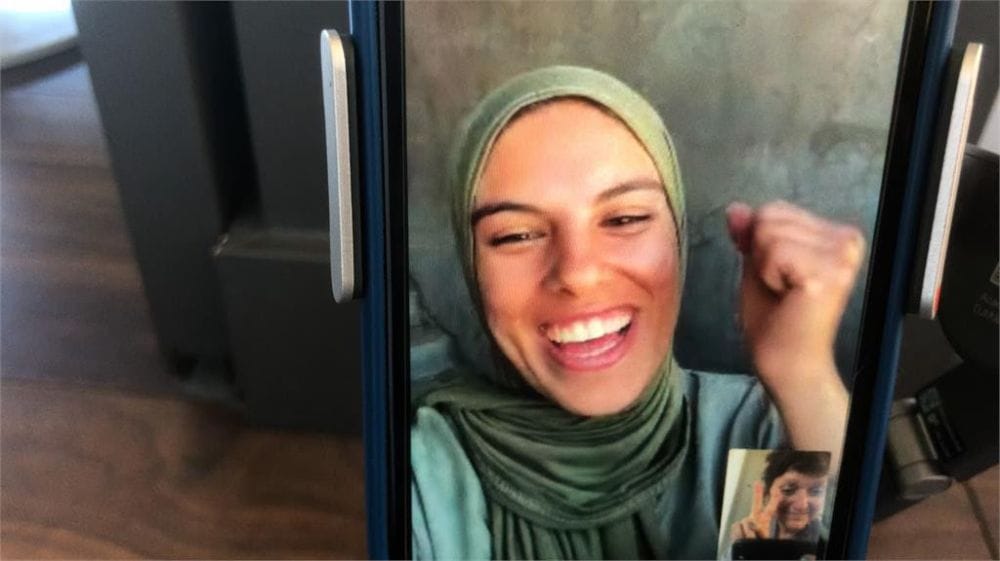
Sepideh Farsi’s Put Your Soul on Your Hand and Walk (لماء ضع على يدك وامشي) on the other hand has been one of the more acclaimed documentaries of 2025, and has a unique storytelling technique all its own. Albeit one that I felt did a major discredit to the story of its own major real figure—Fatima Hassouna. Unlike Hind Rajab, Farsi’s central figure is front and centre throughout the majority of its near two-hour runtime. That’s important and gives the film much of its enduring resonance. Hassouna is shown throughout on FaceTime, shot by Farsi on what appears to be a fairly rudimentary handheld digital camera. Cameras within cameras. Where Hind Rajab was seen only through photos used by its characters to put a face to a name in a situation of heightened tension, Hassouna with her wide and kind smile is inescapable and can lure those who bear witness to it into a false sense of (almost) calm.
But Hassouna’s story is yet another of soul-crushing inhumanity at the hands of Israeli forces. As witnessed here by Farsi’s frustrating camera, that story is drained of so much of its impact. Clinging righteously to that directorial style choice is distracting and discomforting—and not in a way that does service to its subjects story. Often I found myself moved by her story, only to be rattled by the cinematography that gave me an impression of a filmmaker trying desperately to disguise the comparative privilege from which she comes.
The act of watching a documentary is often one of pure emotion. That can be one of the medium’s strengths. Perhaps Farsi thought the use of low quality handheld photography provided a sense of urgency to its story. Perhaps she felt it reflected the hard-to-watch nature of its narrative. I can see why that might be the case. But despite the tragic reality of her story, I struggled with the mere act of watching. I found that its filmmaking techniques only sought to distract from the reality of what Hassouna endures. I grimaced as Hassouna put on a (no doubt sincere) act of tenderness to Farsi’s globetrotting stories as she herself wishes she could travel as short of a distance as Tehran. I doubt there was much of a way around it; this isn’t an instance of there being an alternative that would have worked better. But for as important as Fatima Hassouna’s story is to be told, watching Put Your Soul on Your Hand and Walk proved frustrating.
If you would like to support documentary and non-fiction film criticism, please consider donating by clicking the above link. Any help allows me to continue to do this, supports independent writing that is free of Artificial Intelligence, and is done purely for the love of it.