River of Grass (dir. Sasha Wortzel)
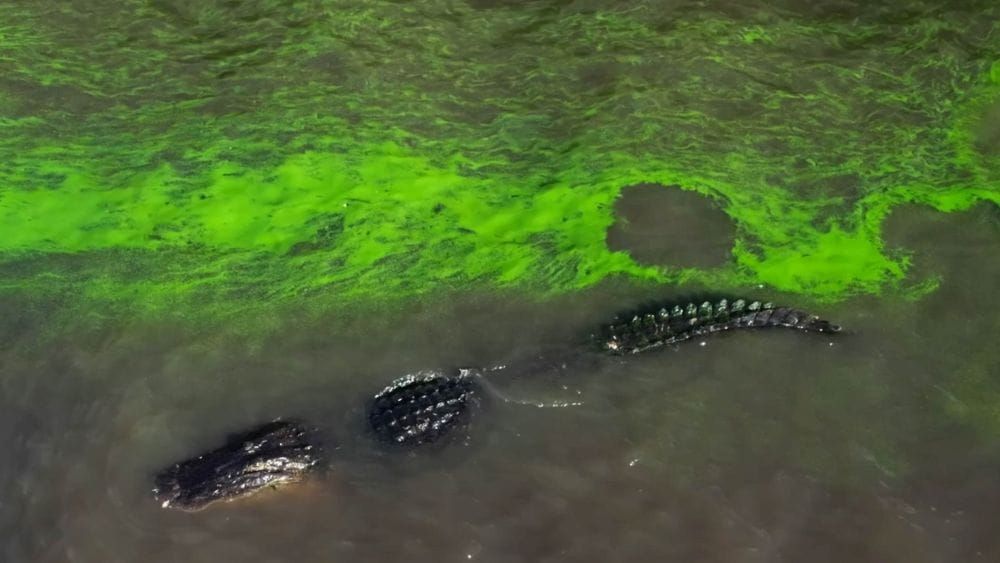
With River of Grass, the elegiac mood piece about the Floridian Everglades, director Sasha Wortzel does something that I really love to see in documentaries. This is in essence a nature documentary, but it’s not just concerned with that one facet of the area or of non-fiction filmmaking. Alongside observing animals like turtles, crocodiles, birds and snakes, she weaves history, politics, characters and local voices. It finds lovely, sad, humanist crevices with which to explore, yet never once loses sight of its vision. It's a tribute and, perhaps, a eulogy, but so much more.
You see, River of Grass is not just about the Everglades. I mean, it is, but not really, if you know what I mean. It’s about nature, and it’s about humanity’s tug-of-war with it. The push-pull relationship that sees one party trying to destroy it while another attempts to save and preserve it. It’s about so very much of life on this planet; where we as a species have come from and where we are sadly going. And it's all told out in the environmental microcosm that is the waterways of this majestic natural creation that has been the home to so much history for good and bad. It’s one of the best films of the year–documentary or otherwise.
Wortzel grew up in this part of the world, so close and yet seemingly so far from the image of “Florida” that we no doubt all have in our minds when one thinks of it in 2025. She presents a very different image, separated from the Mar-a-lago and the Tiger King and the “Florida Man” memes that clog this southern state’s reputation. Like Patrick Bresnan and Ivete Lucas’ exquisite Pahokee from a few years back, it shows a Florida that is diverse and aware of the world around it. A society where people co-exist and confront the world around them. Wortzel with her cinematographer J Bennett, co-editor Rebecca Adorno, and Ryan A. Sullivan's sound design have conjured up a transportive visual and audio experience made up of archival news and educational video, old and new interviews, illustrations, maps and curious meteorological segues. It is partially a biography of the late pioneering environmentalist, ecologist and author Marjory Stoneman Douglas, but other times it's a biography of another activist, Miccosukee woman Betty Osceola in the here and now. And then it might become something of a sound and light show, with buzzing mosquitoes and croaking frogs amid gorgeous images of a golden setting sun casting rings in the camera.
It does at times skirts the line between being a more mainstream environmentalist doc and the more avant-garde works like Jacquelyn Mills’ Geographies of Solitude or, strangely, even Jim Finn’s The Annotated Field Guide of Ulysses S. Grant (the things the mind conjures up!) with its fusion of the historic and the contemporary. Like those films, it has something of a timeless (or, more accurately, out-of-time) poetic visual quality that I find exciting to watch—although, admittedly, might be too dry for some.
That isn’t helped by the filmmaker’s narration, which is spoken in the predominantly flat-toned vocal technique that is so popular with non-fiction filmmakers today. The autobiographical nature of the words is appreciated, offering audiences a more direct line to the truth of the Everglades' history. particularly as she offers up childhood memories of living among the swamps of the Everglades, the force of hurricanes and the way human intervention has changed them to a detrimental degree. But I found it to be the weakest element; over-written and flowery in ways that it needn't have been when the images and the ideas are so heavenly and speak more than words likely ever could (and given the long stretches of River of Grass that do just that, the film is its own testament to that power).
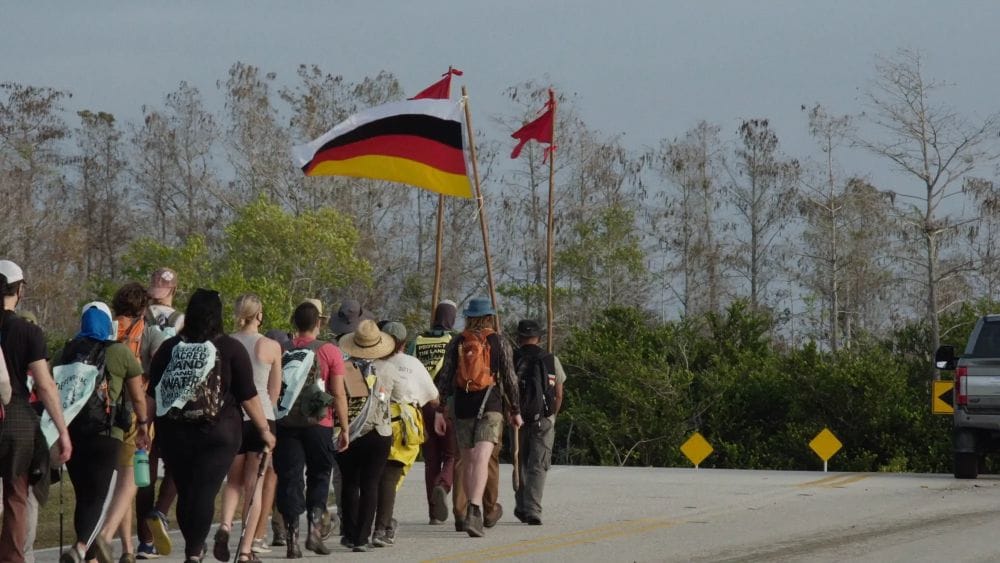
A minor annoyance in an otherwise consuming, nuanced, beautiful film. One that captivates with its images and sounds and the cocktail they create together. Telling a story that's at once charming and also mysterious but always enchanting. Fitting, too, since Wortzel recalls her dreams of the Everglades, appearing to her as if by magic. She finds time for narrative detours like the dangerous burning of sugarcane fields or toxic algal blooms, memories of mosquito swarms, sewing them into the fabric of how the wet season operates and prayer walks of the local indigenous people and python hunts (this film is not to be confused with Xander Robin’s The Python Hunt also from this year). I found it mesmerising.
All that and a great Debbie Deb needle drop, too.
If you would like to support documentary and non-fiction film criticism, please consider donating by clicking the above link. Any help allows me to continue to do this, supports independent writing that is free of Artificial Intelligence, and is done purely for the love of it.