Mr Nobody Against Putin (dir. David Borenstein)
I was not shocked to see Julia Loktev’s My Undesirable Friends: Part I – Last Air in Moscow not get a nomination from the Academy’s documentary branch. Fickle as they can be (and honestly, who can ever really tell what they’re thinking from one year to another) it never quite made sense to me for the first part of that project, despite all of the awards it had won, to land with them like it might with critics organisations. And that’s no shade to either, it’s just something of a fact. Having now seen both Loktev’s film and David Borenstein’s Mr Nobody Against Putin, it made total sense that the latter got a somewhat surprise nomination in Friends’ notable absence.
For despite the discrepancy in runtimes—five-and-a-half hours versus 90 minutes—I found Borenstein’s film, co-directed by necessity by its subject Pavel Talankin, was able to touch on so much more. And if part of my reticence with My Undesirable Friends as an awards contender was that its runtime did a disservice to the immediacy of its issue by making it mightily impenetrable to a more broad-appealing audience, My Nobody Against Putin crashes through a narrative of similar themes around Russian state censorship with a zest that makes it both broadly entertaining and genuinely emotional with a catharsis of sorts that feels rewarding to a viewer beyond, ‘gee, I sat through all of that!’ I will most definitely watch Loktev’s follow-up, Exile, and hope that some of her editorial instincts are reigned in.
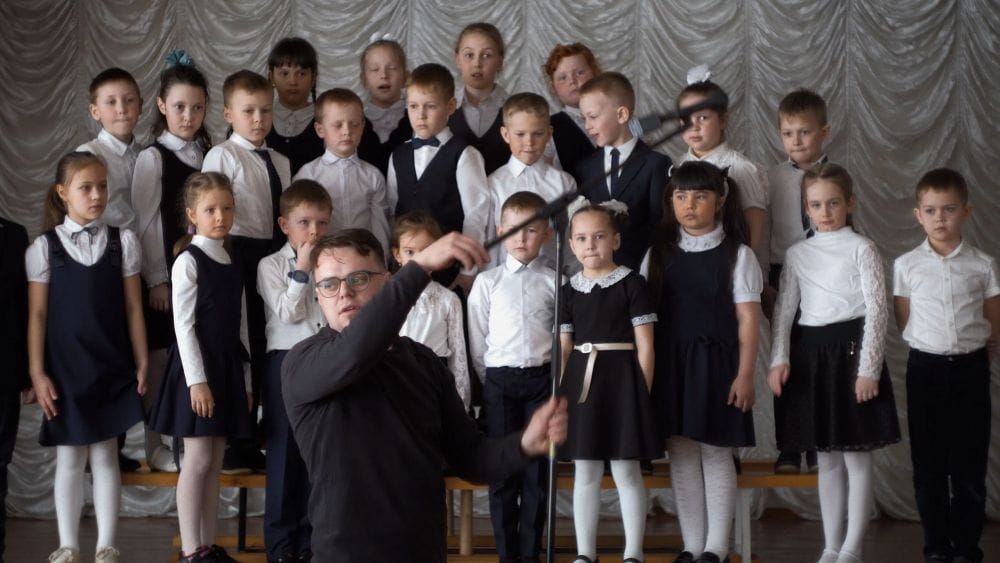
But this is not a review of My Undesirable Friends, a movie that I do indeed have some real admirable feelings towards. But I do think it’s an interesting counter-point to Borenstein’s film, which was shot in disguise more than in secret. In this case, under the auspices of Pavel Talankin’s job as an events curator for a school in Karabash. In the shadow of the Russian Federation’s industrial heartland of the Ural region and the blackened landscape of a smelter, where cows graze on the school lawns and they actually serve cabbage soup, Talankin takes his job as a peer to the students very seriously. They seem to like him a lot with his office made a de facto multi-purpose room (I think that’s an Australian term) where kids and teenagers can express themselves, share their passions, and be young without the responsibilities of poverty, traditional gender roles, and the increasing reality of war (“a military exercise”) with Ukraine (or with anybody, really). Despite his quiet queer existence, Talankin has carved out a niche for himself in this town.
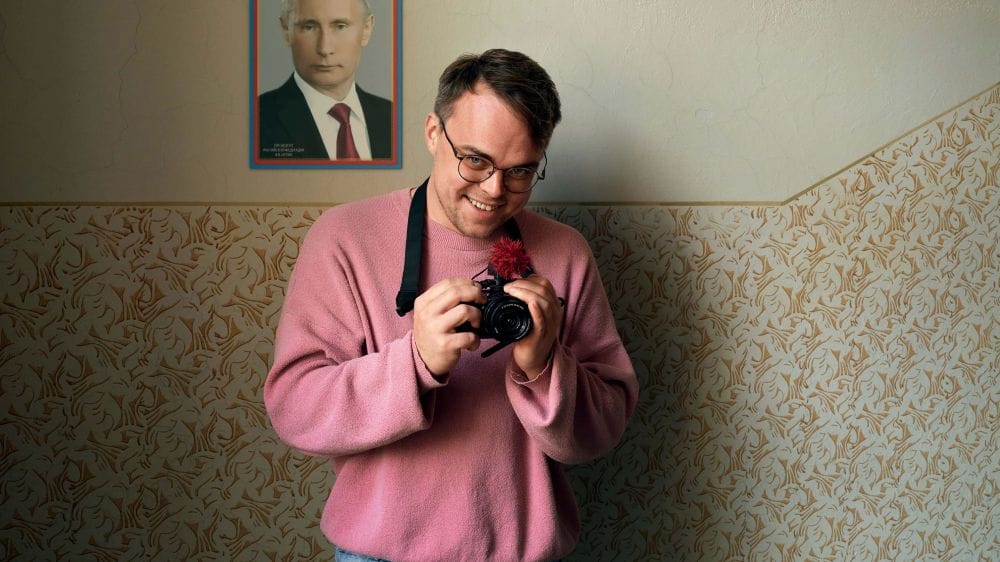
The announcement of war against Ukraine changes all of that. Teachers and eventually students are given scripts to recite in classrooms for Talankin’s camera, filmed and uploaded to a mysterious Russian government database as proof of the nation’s support for the war, for President Putin, and for the very concept of Russia itself. In his own words, Pavel becomes a pawn of regime. He captures 12-year-olds learning marching drills, children reading war poems in class, teachers reciting scripts in front of their students, re-doing them for the camera when they make a mistake or pause just a little bit too long. Can’t have the government thinking you don’t really believe the words you’re being forced to say, can you?! Increasingly the boys of the school are taught about guns, bombs and landmines in preparation for their inevitable conscription. There’s even a grenade-throwing competition with medals like it is the Olympics. The school’s history teacher espouses the virtues of Soviet leaders who murdered civilians—he then wins a local award for favourite teacher of the year. Curious. Putin is even seen in a video saying, “Commanders don’t win wars. Teachers win wars.”
Pavel’s overt and public objection to the blatant propagandist methods that are rather rapidly put in place puts him at odds with the school and the townspeople at large. Acts of protest both small (a modest Russian democracy protest flag on his wall) and large (playing Lady Gaga’s “Star-Spangled Banner”, taping large Xs on windows) come under fire and soon students and teachers, even his own mother the school’s librarian(!), appear to turn away from him. At least publicly.
Pavel Talankin’s video content, smuggled out of the country by the man himself and energetically assembled by editors Nicolaj Monberg and Rebekka Lønqvist, eventually turns poignant and ultimately despondent. The names of dead soldiers, students and friends and family members, come thick and fast. Boys hide their fear behind jokes, their love for their friends and their brothers a brief but eye-opening respite from the hardening political realities within which they all exist. A young girl throws up a punk rock salute as if by some rebellious teenage instinct, with us viewers knowing full well that she and her friends will never get to really exist in a world where such rites of passage are possible. Having seen numerous documentaries about this war from the POV of everyday Ukrainians, I found this an affecting film that shows not just—like My Undesirable Friends—anti-establishment rebels, but the struggle of those too young to have lived under Soviet times and cannot understand why the adults are sending them to their deaths (and openly admitting as such). Culminating in a painful climax for all involved at the school's graduation.
And yet, Mr Nobody never quite feels like it carries the burdening weight of its reality. Mr Nobody Against Putin the film and Pavel Talankin the man has something of a bratty vibe. Perhaps not unlike that of the teenagers he videos. Talankin is petty and rash and that attitude carries over into the film. It’s a whirlwind of emotions like a kid going through the turbulence of growing up. That tonal surprise is one of its biggest assets. After “Mr Nobody” himself, whose sensitive and principled stance makes for compelling viewing.
If you would like to support documentary and non-fiction film criticism, please consider donating by clicking the above link. Any help allows me to continue to do this, supports independent writing that is free of Artificial Intelligence, and is done purely for the love of it.