Henry Fonda for President (dir. Alexander Horwath)
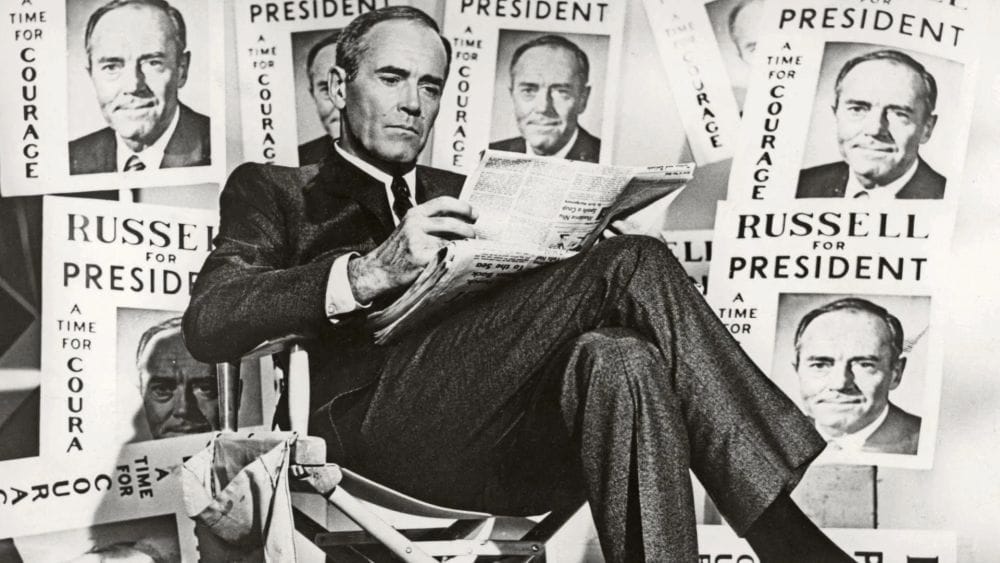
I love Henry Fonda. I would probably say he is my favourite male actor from classic Hollywood. Even when I haven’t loved the films—like John Ford’s Young Mr Lincoln, which unsurprisingly takes up a lot of editorial real estate in the first half of this three-hour picture—he exudes the sort of actorly qualities I find particularly attractive. He is an actor, like Robert Redford after him (to name one who does appear presenting Fonda with his honourary Oscar), who can at once represent something so quintessentially masculine on screen yet with the knowing gaze of somebody who understands more than the mere black and white of the world. A woke king of sorts who was handsome in an extraordinarily ordinary sort of way, if you know what I mean. You could call him All-American if his weren’t quite so sensitive.
I think it’s what Beatrice Arthur’s Maude Findlay saw in him in the 1976 episode of Maude that gives Alexander Horwath’s film its title. Clips from which appear here as something of bookending exclamation points to the Austrian filmmaker’s central proposition. That he is a gentleman and emblematic of what was once a leftwing American ideal who has "spiritual honesty". It all comes through plain as day even in films that don’t necessarily share an obvious political viewpoint, but especially so in films that do. 12 Angry Men, on which he was also a producer; The Ox-Bow Incident; Fail Safe; The Grapes of Wrath and others. Even when cast as the villain, as in Sergio Leone's Once Upon a Time in the West, Fonda's reputation leant his character a history with viewers that said so much without the need to spell it out. And as Henry Fonda for President unfolds—landing somewhere between biography and elegiac longform video essay—I found myself eager to explore more of his filmography, no doubt rich in discoveries both famous and less-so.
We learn more about Henry Fonda than we would certainly get from a more old-fashioned documentary. Over three hours, Horwath uses Fonda’s life and career as a backdrop for a changing America—from long before his birth with his ancestors' migration to America, to his final days in 1982. “An actor’s story and a story of America, spiralling around each other”, Horwath has said. Politics, societal change, civil rights and activism all play parts on and off the screen, accented by the director’s own history with Fonda. Horwath finds parallels, sometimes uncomfortably so like in Alfred Hitchcock’s The Wrong Man, which used the story of Fonda’s wife, Frances Seymour, as backdrop to its own tale of mistaken identity. An interview from around the production of his final film, On Golden Pond that he made with his daughter, Jane, provides much of the documentary’s audio alongside film clips and Horwath’s own (occasionally repetitive) narration.
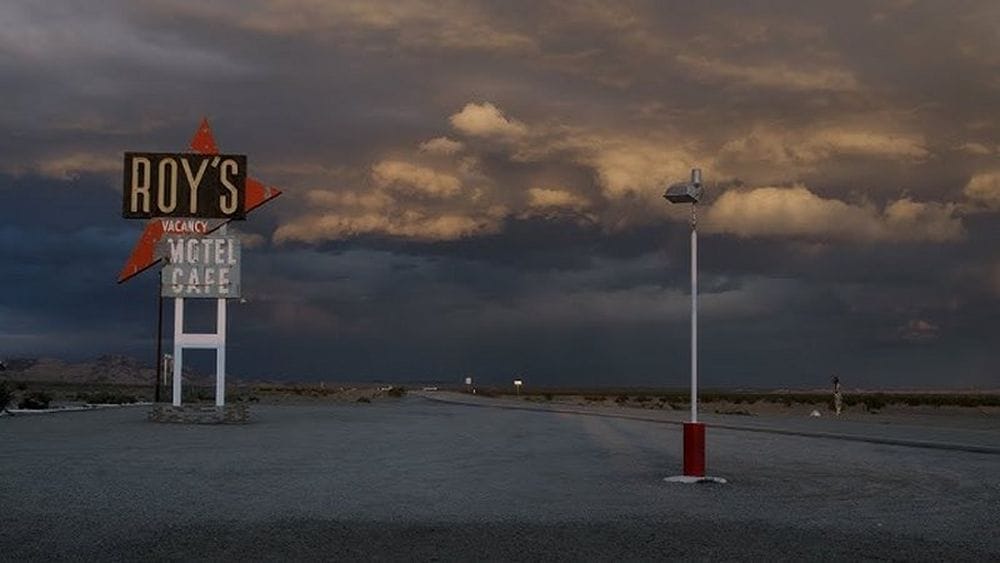
I really like this style of non-fiction filmmaking. It's an essay film, but weaves and shapes itself in ways that provide more natural narrative ebbs and flows. It’s long, yes, but Horwath and his editor Michael Palm allow the story to breathe. Sidebars and segues are undertaken, almost always valuable. New material of significant locations, shot also by Palm, allow for Fonda’s life and influence to be brought decidedly into the contemporary age without the need for unnecessary talking heads or lingering too long on the lives of his children, accomplished actors in their own right. The resulting film is quiet, almost unassuming, just as Fonda was. But like him, it has so much going on under a calm surface. It’s adoring, but never hagiography. It’s critical, but never without deference and nuance. Without saying it in as many words, it speaks to a day and age defined by "Make American Great Again" by asking its own incisive questions about what that really means. Unsurprisingly, Fonda was no fan of his fellow actor turned politician, Ronald Reagan.
There’s a remarkable sense of fulfillment from watching Henry Fonda for President. It’s impossible to condense a person’s life down to such a length, although this whole filmmaking lark is often an attempt to do just that. But Horwath gets at something that too few documentaries can. It feels as if it really gets to the essence of the man in a way I didn't really think possible outside of a lengthy biography. It’s almost Ken Burnsian—perhaps Fonda just sounds like Peter Coyote—in how it flutters through time with ease, balancing tragic history with stoic intellectualism and brute humanism. Yes, the film is “about America”, but it never lets itself get too far away from being about Henry Fonda, you know? I found this to be an excellent film that pulls off some sort of minor miracle and I have to wonder what he could achieve about any number of other artists.
I’ll end with a quote that I simply had to write down. When asked, “do you think big business is getting out of control?”, he responds: “No, I don’t think they’re out of control. I think they’re getting more and more in control.” Indeed.
If you would like to support documentary and non-fiction film criticism, please consider donating by clicking the above link. Any help allows me to continue to do this, supports independent writing that is free of Artificial Intelligence, and is done purely for the love of it.