Cutting Through Rocks (dir. Sara Khaki and Mohammadreza Eyni)
The words “Cutting Through Rocks” is such an evocative title for a documentary. It conjures up so many potential ideas as to what it is going to be about. That co-directors Sara Khaki and Mohammadreza Eyni choose to open their debut feature with the actual cutting of actual rocks almost feels a bit too on the nose as metaphors go. But as we quickly learn, their subject—37-year-old divorcee and aspiring political candidate Sara Shahverdi—is not merely fending for herself in her rural Iranian home, but very pointedly showing a new form of womanhood to the citizens of her patriarchal town. Not just to the men, those who repeatedly tell Shahverdi that she should be living with her husband or her father, shouldn’t be working more than a man does and questioning everything she does from why women visit her home to why she insists on wearing pants, but to the women, too. Women, for whom the sight of what we in the western world would call a feminist is rare and still taboo.
Sharverdi wins a spot on the city council early in Cutting Through Rocks, winning over not just the women, many of whom are voting for the very first time, but many men, too. In perhaps my favourite shot of the entire film, the distance between the lives of the townspeople is starkly put into contrast: Sharverdi celebrates on the street with a group of men while no more than a couple of metres away stand a group of women indoors looking out at the festivities from a window.
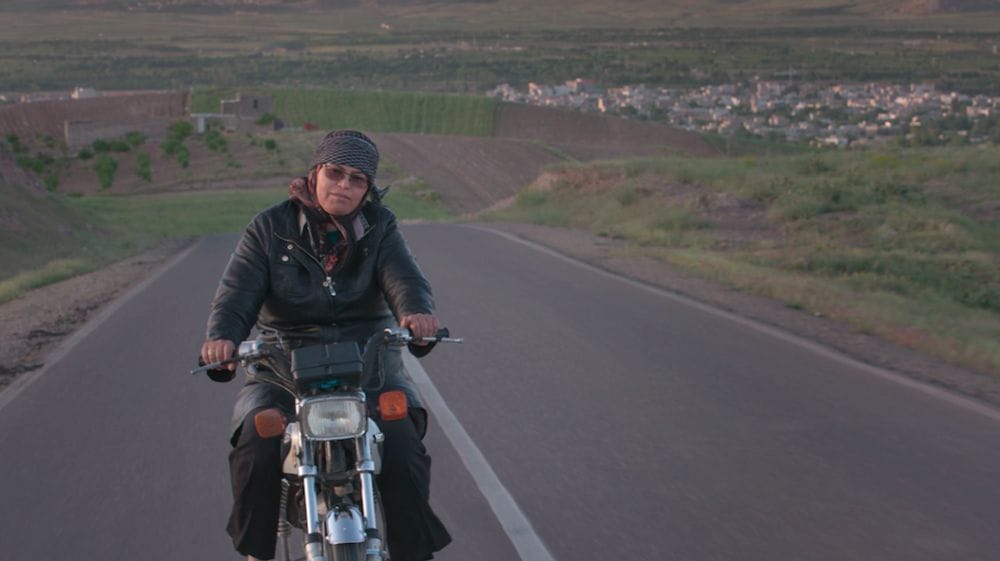
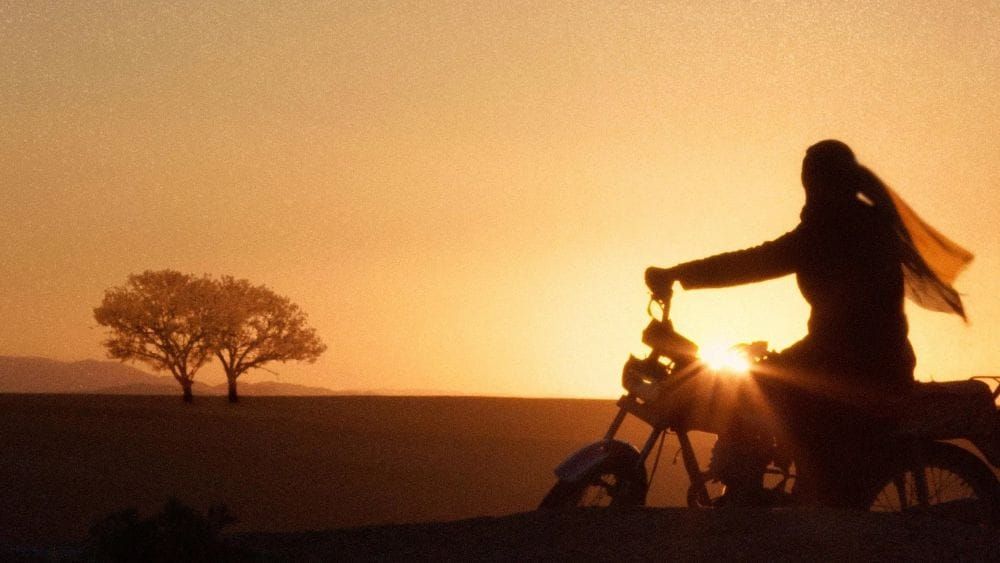
That dichotomy gives Khaki and Eyni a powerful thread throughout its runtime. Whether she is riding a motorcycle, the only women of her village to do so, or arguing with put-upon male councilmembers who don’t want to work with a woman, she is showing the capability of women in an environment that is willing to vote for her yet won’t let the rest of its female population exist in the same way. It’s not a surprise that it won the Grand Jury Prize at Sundance for world cinema (documentary) when its images can be so striking and get so efficiently to the heart of its story.
Handsomely shot and assembled with some real lovely moments of visual finesse and storytelling sweetness, Cutting Through Rocks takes material that could be hard-going in other films. It’s constructed in such a way that hope is fostered even in the face of continued adversity for the women at its core. At its most devastating, a 12-year-old pleads for a divorce only to then be married off yet again, or a classroom of young girls who pledged to stay in school are later tallied one-by-one as no longer studying and instead are now married. But with Sharverdi at its centre, there is always something to give this town and presumably other women and girls elsewhere in Iran the image of survival and persistence in the face of societal misogyny.
The movie ends with another quite obvious metaphor as Sharverdi leads a small group of girls on a motorcycle ride through the beautiful Iranian countryside. Cutting a path forward (through rocks?) where the limits on their freedom are not decided by men who have never known anything different. But instead, it can be their own choice. Realistic or not, it’s a message worth being told for the chance that it might actually be heard by a generation that is ready to hear it.
If you would like to support documentary and non-fiction film criticism, please consider donating by clicking the above link. Any help allows me to continue to do this, supports independent writing that is free of Artificial Intelligence, and is done purely for the love of it.