Cover-Up (dir. Laura Poitras and Mark Obenhaus)
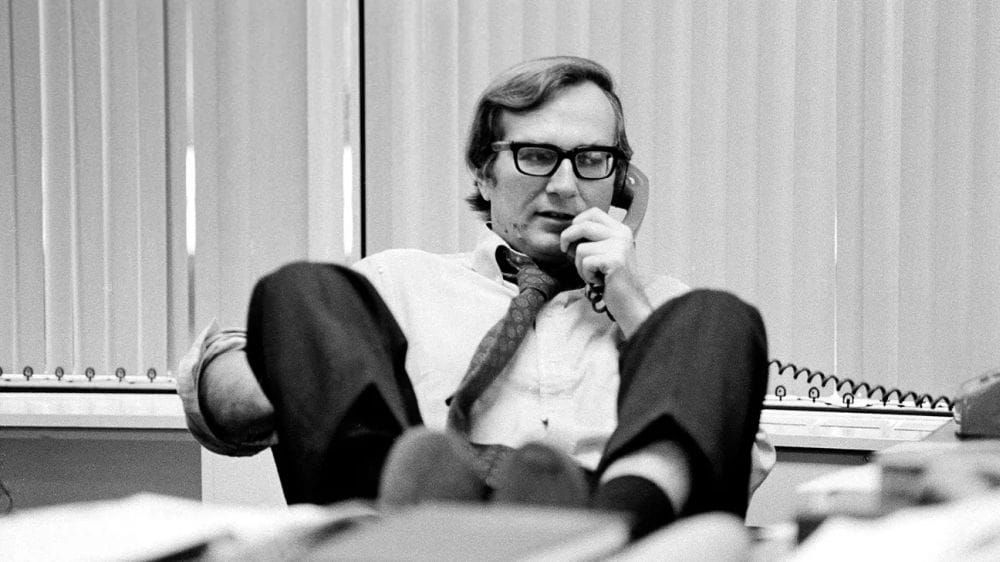
Laura Poitras is just so damn good at this. Cover-Up, co-directed with Mark Obenhaus, is probably her most conventional film to day—a biography of famed American journalist Seymour ‘Sy’ Hersh. But conventions need not be a hindrance to good storytelling and documentaries needn’t be flashy or overtly form-pushing to impress. Her point of view is clear as day even if it’s not as doggedly revelatory as other works. “I was always writing stories that made people mad”, says Hersh. And it’s probably fair to say that Poitras is the same with her movies. There usually somebody getting their nose out of joint from her probing and clear-eyed portrayals of scandal, greed and corruption. Cover-Up then is an appropriate collision of two worlds, no doubt made possible by the collaboration with Obenhaus who had previously directed Hersh in the journalistic doc Buying the Bomb in 1985 (available to watch at the Internet Archive). I gather it was his attachment to the project that allowed Poitras to get her now 20-year-old wish of an interview with the now 88-year-old. Whatever the case, I'm glad it finally happened—and what fortuitous timing!
Poitras and Obenhaus use their rare opportunity to tell a rip-snorting tale of American journalism. The sort of story that feels almost like folklore. ‘Did you hear the one about..?’ It was Hersh’s goal to tell the story of an America that’s hard to tell—and oftentimes hard for America to digest. Yes, it is a tale of earth-shattering breaking news, the sort of that rips a hole through the public psyche. It’s also a tale of dogged perseverance and the question of integrity. People often like to say that documentaries “play like a thriller” and I guess there are passages here that could probably be easily boiled down to something like that if you really felt the need to. But it’s not so simple. Rather, it plays like a damning, sobering story of American imperialism. A film where just about every single scene (Every. Single. Scene.) could just as well be told about the world of politics and journalism in 2026.
Upon its production, who could have foreseen that we would be once more talking about military personnel needing to question the barbaric, violent and inhumane orders of their agencies and the government that oversees them. Actually, to be honest, the Poitras and Oberhaus probably could see that coming a mile away; Hersh, too. They’re not dumb people. There are certainly plenty of private citizens, too, who can see through the bullshit served up to them on a daily basis by their elected representatives and the media. Particularly as it relates to the United States as one of the worst cases of failing to learn a single thing from history. Hell, even in the literal weeks since its digital streaming release on Netflix, the story of CBS News’ quiet censoring of a 60 Minutes II report into Abu Ghraib prison torture in the early 2000s has been mirrored by that of the current CBS News administration doing the exact same thing a report about the CECOT immigration gulag. Hersh states that he was nobody’s friend at the Pentagon. Probably as it should be! And now we have journalists being told what they can and cannot write about there. It’d be comically lazy writing if it weren’t all true. Did you hear the one about America spying on its own people? Communist hippies or woke antifa, it's all the same.
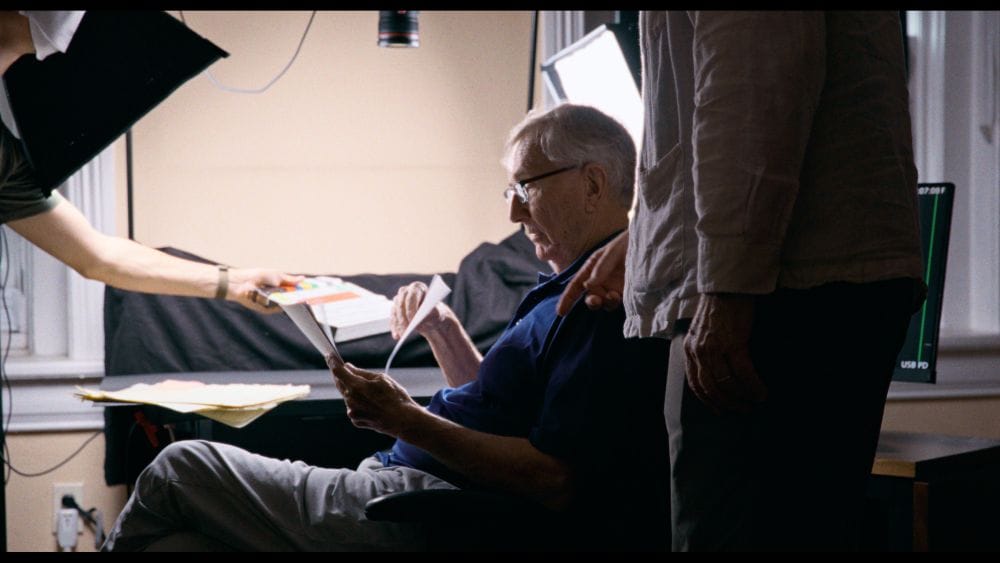
Thanks to the propulsive editing of Poitras, Amy Foote and Peter Bowman, deftly assembling a collage of archival footage, Hersh’s story and that of the scandals he broke and reported on has a distinctive heft to it. Soundtracked by Maya Shenfeld’s low, intensely droning score, Cover-Up is more grounded and compelling than what the standard for such fare may be on Netflix. Its narrative is complicated (his own words) in the second half by Hersh’s insecurities coming to the fore amid discussion of sources. Particularly so in the wake of his JFK and Marilyn Monroe embarrassment. “It’s complicated to know who to trust”, Hersh says early on. “I barely trust you guys.” It’s not hard to see why. But this gives the movie some necessary grit as it barrels towards stories like Abu Ghraib in which the sources are still very much alive, some of whom appear in talking head interviews.
Richard Nixon is heard saying that, “a son of a bitch is a son of a bitch, but he’s usually right.” And, for me, the same goes for Laura Poitras. While it obviously can’t stand up to the towering achievement of All the Beauty and the Bloodshed, one of the very best films of this decade, I found Cover-Up to be a mighty filmmaking achievement. Entertaining as well as troubling. Hersh was labelled unpatriotic for revealing stories that were deemed to be dangerous to America’s security and a dagger to its standing on the world stage. I can only hope Poitras continues to be as boldly unafraid to tell stories that need to be told and to let the current generations get mad about them.
If you would like to support documentary and non-fiction film criticism, please consider donating by clicking the above link. Any help allows me to continue to do this, supports independent writing that is free of Artificial Intelligence, and is done purely for the love of it.