Citizen Sleuth (dir. Chris Kasick)
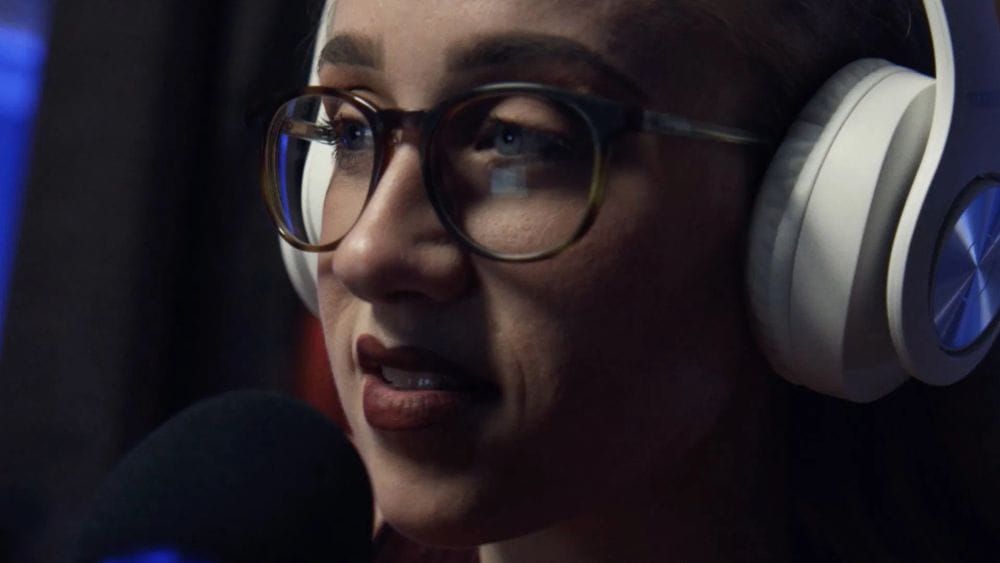
Citizen Sleuth is director Chris Kasick’s behind-the-scenes look at a true crime podcast in real time. That might sound like—and I thought it several times in its front half, too—it’s little more than a commercial for the Mile Marker 181 show hosted by Emily Nestor. But as its narrative continues on… well, at some point it very clearly is not. The show no longer appears to be available online, although the case that formed its reason to be does appear to have caught the attention of other podcasts although I can’t really imagine wanting to listen to any of those after watching Kasick's film.
Shot in 2019, the then 20-year-old Nestor from the Appalachia in West Virginia who decided to start up Mile Marker 181, a podcast to get to the bottom of a local case that has fuelled conspiracy theories for years. I suppose if you are into the true crime genre as Emily was (key word, was!) then you’ll be disappointed by this movie. A little bit like Deborah S. Esquenazi’s Night in West Texas, which I literally just wrote about, the crime itself isn’t inherently the Capital-P Point of Citizen Sleuth. Although it is integral and is the reason that Kasick is in West Virginia in the first place, the death of Jaleayah Davis is kind of beside the point for what the film ultimately says and does as a work of cinema.
Basically, Davis’ death was ruled an accident. A horribly violent accident, but an accident nonetheless. Built on the public’s growing need for violence as spectator sport and some honestly iffy doesn’t-pass-the-pub-test familiar realities to the case’s investigation, the young woman’s death in a late-night freeway incident was ripe for the sort of whisper campaign that inspires shows that Mile Marker 181 aimed to replicate. What may have once been a community rumour is now fodder for international audiences to wide broad, sweeping thoughts about stuff they don't know anything about. What fun! But hardly new.
But the easy podcast wasn’t to be. And so while Nestor pivots, so does presumably the finished product of Citizen Sleuth. I don’t think the film entirely holds up for that reason. You can sort of see the (pardon the grisly pun) skid marks on the road with this one. That isn’t necessarily a bad thing though, because either deliberate or by chance, Kasick (in his first documentary feature) has landed on several really interesting lines of thought as a result of Nestor’s investigation spinning out of control. And in this field, that's a valuable asset to have.
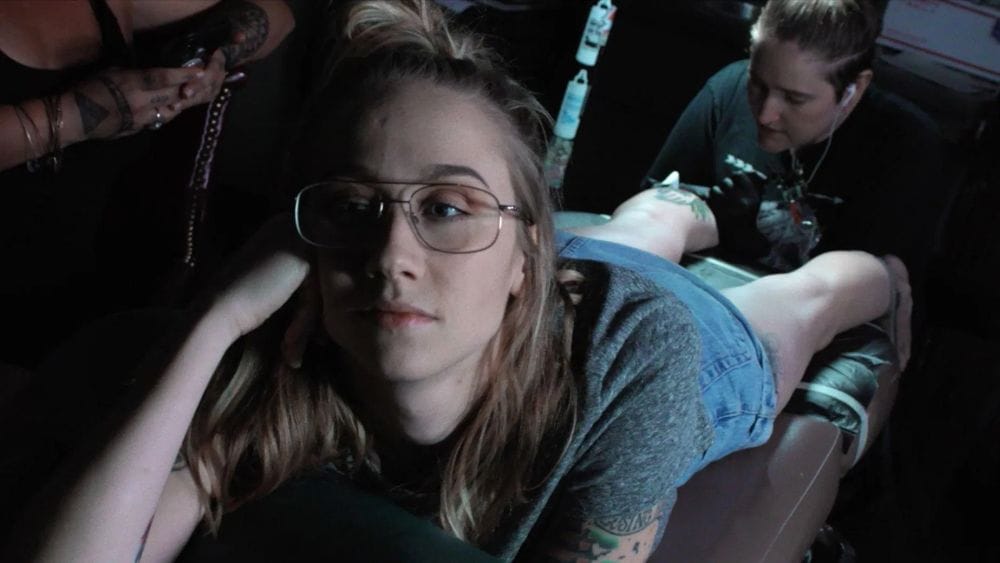
Before the subjects even address it themselves, I found myself considering how some people are more likely to become amateurs than they are to actually go through the tougher processes of studying and learning and becoming. Emily Nestor isn’t a journalist in any professional way, nor is she a police detective. And there are reasons that in both of those professions, people have to work their way up to doing something like what this young part-time investigative podcaster attempts. Both a tattoo artist friend and the woman’s own mother crow proudly that she is neither a journalist nor the police, but maybe that's not ideal when dealing with matters of literal life and death, innocence and guilt. There have no doubt been some successful 'citizen sleuths' in the world that jumped right on it and found success and helped bring criminals to justice (or vice versa). But it does raise the question of a modern society where somebody like her, innocently (as I believe Emily did) or with the selfish desire of fame and fortune, is increasingly more likely to forgo those formalities for whatever reason (again, not putting anything malicious onto her, it’s just curious). Emily raises Clarise Starling pretty early in Citizen Sleuth, but doesn’t quite seem to figure that she was still in the FBI and didn’t just land on her investigation of Buffalo Bill out of the spare room in her house in her leisure time. I wish the film had probed that a bit more beyond a fleeting reference to having once wanted to be a profiler (Mindhunter on Netflix also gets name-dropped and well it ought to!).
This then in turn brought up ideas of maturity, both physical, mental and moral, to undertake these sort of tasks. Was Emily Nestor truly prepared for an investigation of this sort and the emotions that it would arise from a family desperately clinging onto the idea that somebody else was to blame for their child's death. Or what about that of the potential suspects that she focuses in on, and the townspeople who’ve lived with this case for years. There is a reason why police and journalists don’t (usually) publicly discuss every twist and turn of their case publicly—and something like this year's HBO four-part series The Yogurt Shop Murders exemplified that perfectly. It's a recipe for collateral damage. These are people's lives. It’s something that will only lead to distrust. Particularly so with an audience that is slowly growing discontented with being sold merchandise and advertisements in the face of minimal developments and despite her own growing unease with how the investigation is progressing. Again, I wish we'd gotten to hear more from Emily herself on this matter.
A sequence at CrimeCon is especially illuminating. The business of true crime and the brazen way it has industrialised itself to the point of parody (see Only Murders in the Building). Or how about the end credits that feature an audio collage of happily welcoming podcast introductions that quite bluntly lays out how real human deaths have been commodified to sell subscriptions and tote bags. The filmmaker briefly mentions his own complicity in this, suggesting that he too is trying to profit (professionally if not exactly commercially) from Jaleayah Davis’ death. When Kasick takes the investigation into his own hands towards the film’s end, it’s as if he is acknowledging that these forms of entertainment don't show us everything—or even attempt to.
It all tallies up to a movie that is at least interesting and is about more than you might think it is about. It should have been more about the things it is actually about. But as true crime documentaries go, it’s perhaps the first that actually provoked these sort of ideas as I watched and that’s something worth giving credit for.
If you would like to support documentary and non-fiction film criticism, please consider donating by clicking the above link. Any help allows me to continue to do this, supports independent writing that is free of Artificial Intelligence, and is done purely for the love of it.